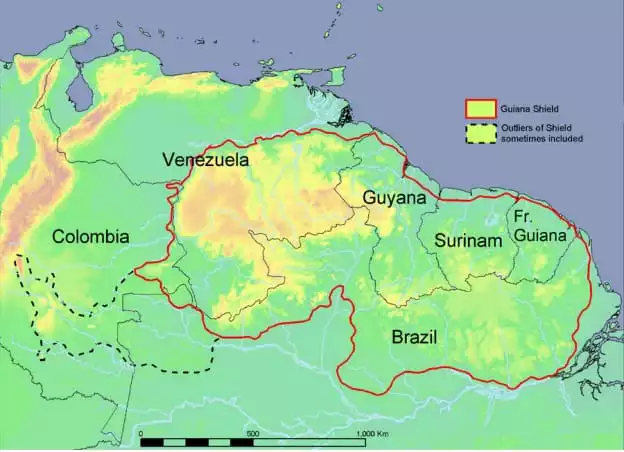
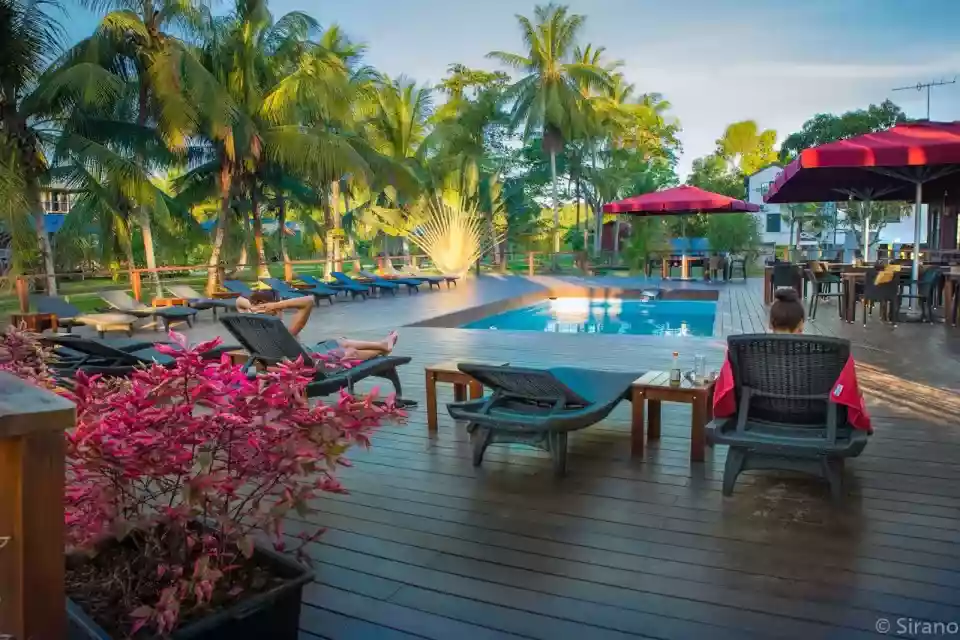
When people search for the giants of Guyana, they often expect to find corporations, energy companies, or sprawling business empires. Yet Guyana’s true giants aren’t measured in market capitalisation or quarterly earnings—they’re measured in metres, kilograms, and wingspans that defy imagination.
Welcome to the land where South America’s largest cat prowls through pristine rainforest, where the world’s most powerful raptor rules the canopy, and where ancient fish the size of humans surface from untamed rivers. This is Guyana—the last great wilderness frontier, a sanctuary for megafauna long vanished elsewhere on the continent.
This classic small-group journey encompasses many of Guyana’s natural highlights. Begin in historic Georgetown with a guided market and city tour. Fly across endless rainforest into the heart of the country to witness Kaieteur Falls—the tallest single-drop waterfall on Earth. Continue to the million-acre Iwokrama Rainforest Reserve for jungle walks, river excursions, the Canopy Walkway, and the rare opportunity to spot a jaguar. Spend time in the Makushi village of Surama before venturing into the savannahs in search of giant river otters and giant anteaters, and take part in the black caiman research project at the indigenous community of Yupukari.
Here are the ten giants that make Guyana one of the most extraordinary wildlife destinations on the planet—and exactly where to find them.
Jaguar — South America’s Largest Cat
The jaguar (Panthera onca) is the undisputed apex predator of the Neotropics and symbol of Guyana’s wild heart. Unlike their African cousins, jaguars are water-loving cats, frequently seen swimming across rivers or stalking caiman and capybara along the banks. The unpaved road through the Iwokrama Reserve acts as a natural heat regulator—cats use it to dry off after heavy rain, making this one of the best jaguar-spotting locations on Earth.
Best Places: Iwokrama Rainforest Reserve, Karanambu Lodge
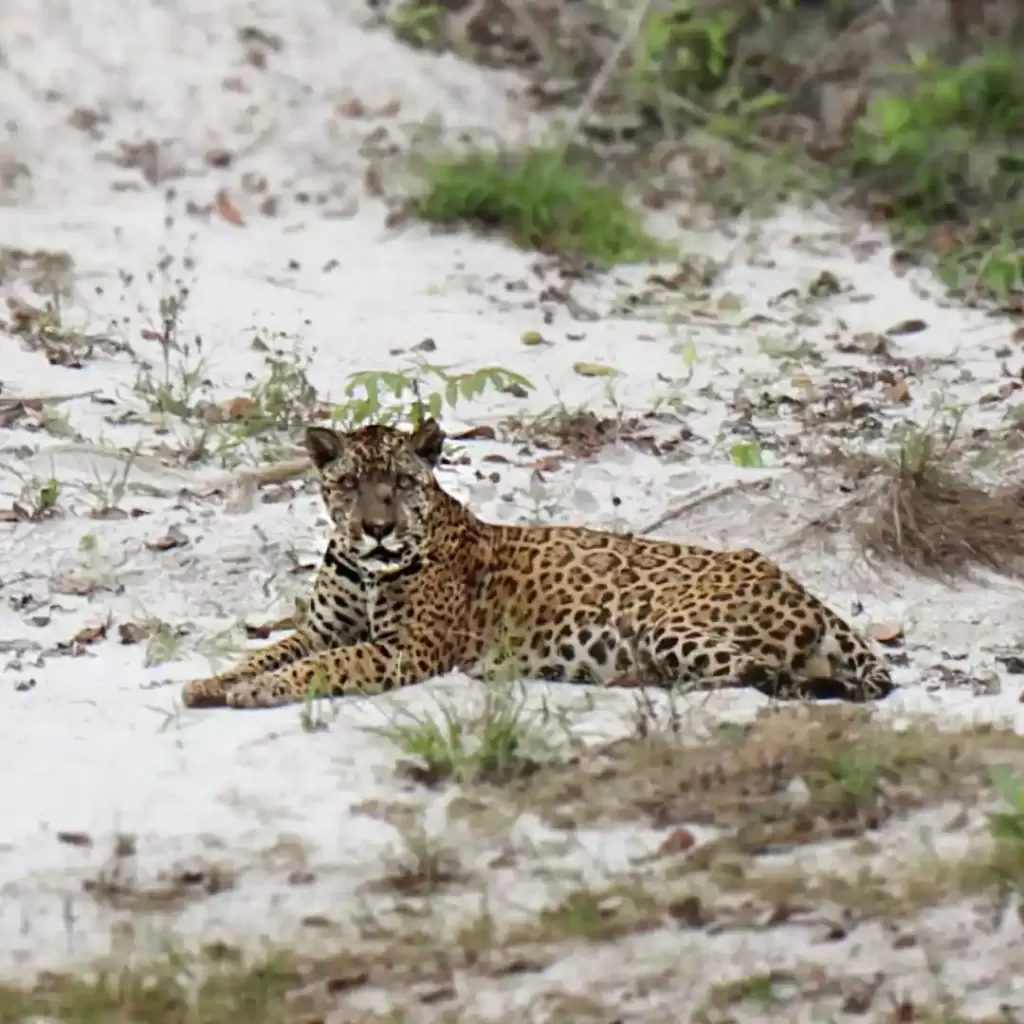
Photo: Jaguar
Giant River Otter — The River Wolf
Known locally as the “Water Dog” or “River Wolf”, the giant river otter (Pteronura brasiliensis) reaches lengths of up to 1.8 metres, making it the largest member of the mustelid family. These highly social animals live in close-knit family groups and communicate through a repertoire of nine distinct calls that echo through Guyana’s waterways. Their noisy chatter often gives them away before they’re seen.
Best Places: Karanambu Lodge, Iwokrama River Lodge, Rewa Eco Lodge, Surama Eco Lodge
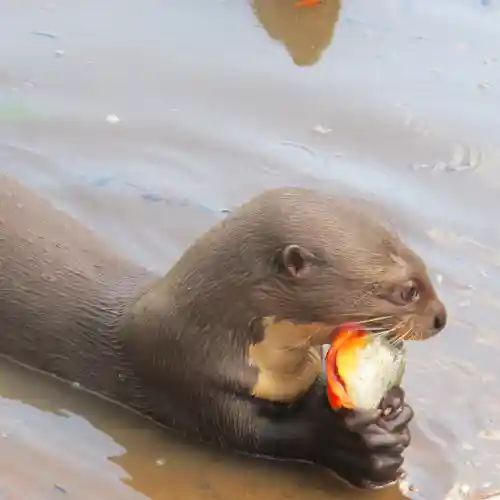
Photo: Giant River Otters
Harpy Eagle — The Most Powerful Raptor on Earth
With a wingspan reaching two metres and rear talons as large as a grizzly bear’s claws, the harpy eagle (Harpia harpyja) dominates the rainforest canopy, preying on sloths and monkeys. These majestic raptors are monogamous and reuse enormous stick nests built high in Silk Cotton trees for decades. Once a nest is found, sightings are virtually guaranteed for months as parents feed their growing chick.
Best Places: Surama Eco Lodge, Maparri Wilderness Camp
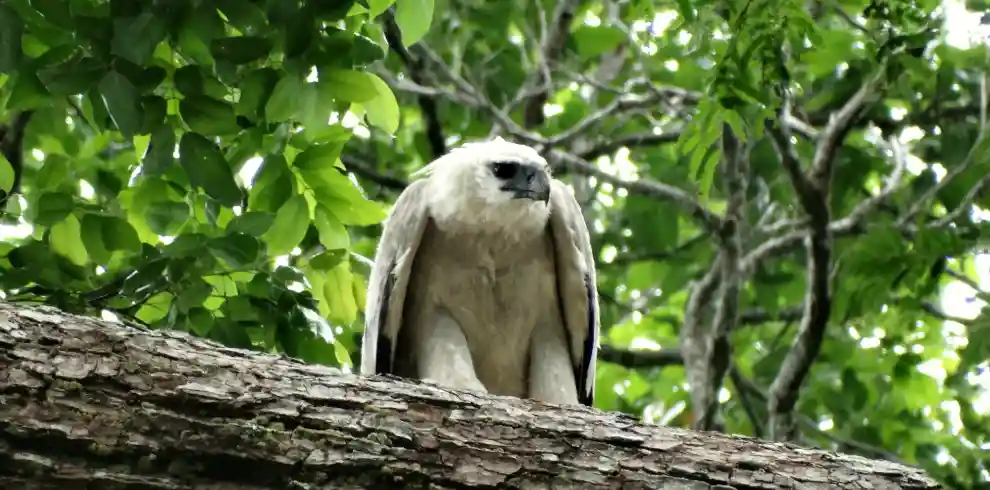
Photo: Harpy Eagle
Giant Anteater — The Insect Hunter
The giant anteater (Myrmecophaga tridactyla) is a marvel of evolution—seven feet long, toothless, and equipped with a two-foot tongue capable of devouring up to 30,000 ants or termites a day. In the Rupununi Savannahs, they are often found curled up in long grass, their bushy tails draped over their bodies like blankets. Though generally docile, they can become formidable when threatened, capable of fending off jaguars with their powerful claws.
Best Places: Karanambu Lodge, Waikin Ranch, Wichabai Ranch, Caiman House
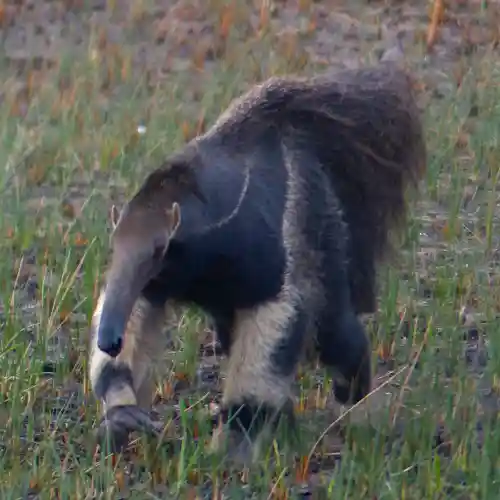
Photo: Giant Anteater
Arapaima — The Largest Scaled Freshwater Fish
The arapaima (Arapaima gigas) is a living fossil—the largest scaled freshwater fish in the world, reaching over three metres in length and weighing up to 400 pounds. It breathes air, surfacing every few minutes with a distinctive gulp. In Rewa Village, local conservation efforts have transformed fishing into a sustainable catch-and-release activity, creating the highest density of arapaima in Guyana.
Best Place: Rewa Village (Grass Pond)
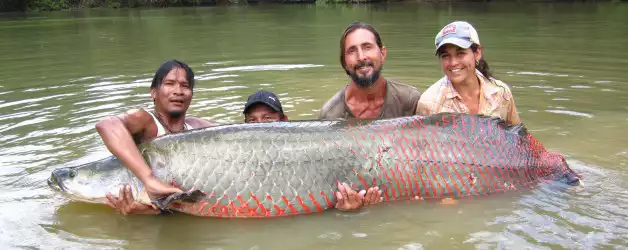
Photo: Arapaima
Black Caiman — The Giant of the Rivers
Reaching lengths of over five metres, the black caiman (Melanosuchus niger) is the largest predator in the Amazon Basin. Their dark hides and red eyeshine at night make them unnervingly majestic. At Caiman House Field Station in Yupukari, guests assist researchers in capturing, tagging, and releasing these prehistoric reptiles—a hands-on conservation experience unique to Guyana.
Best Places: Caiman House (Yupukari), Iwokrama River Lodge, Karanambu Lodge
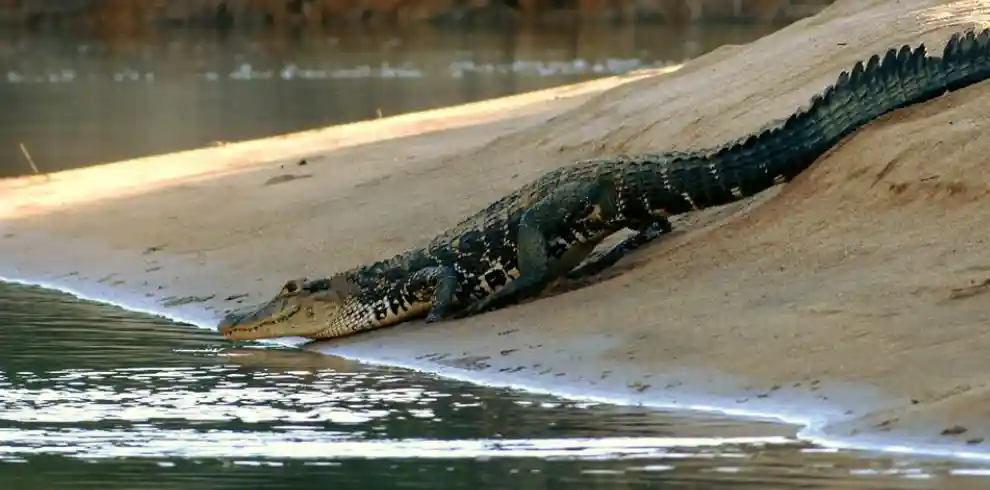
Photo: Black Caiman
Green Anaconda — The Heaviest Snake on Earth
The green anaconda (Eunectes murinus) is the heaviest snake known, weighing up to 500 pounds and growing to 30 feet in length. These semi‑aquatic constrictors haunt swamps and slow-moving rivers, with eyes and nostrils positioned atop their heads, allowing them to lie in ambush almost entirely submerged. Despite their terrifying reputation, they are secretive and rarely pose a threat to humans.
Best Places: Rewa Eco Lodge, Iwokrama Rainforest
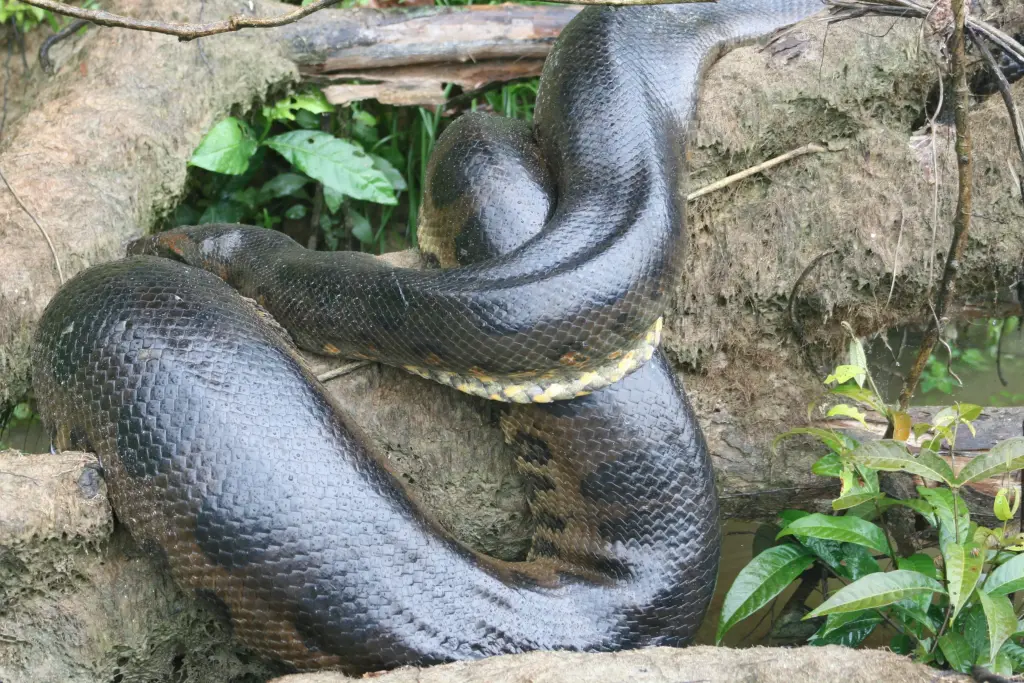
Photo: Green Anaconda
Capybara — The World’s Largest Rodent
The capybara (Hydrochoerus hydrochaeris) is the world’s largest rodent and a cornerstone of Guyana’s ecosystem, serving both as grazer and prey. Highly social, they live in groups of up to twenty and sometimes hundreds during the dry season. Excellent swimmers, they can remain underwater for several minutes to escape jaguars or caiman.
Best Places: Waikin Ranch, Wichabai Ranch
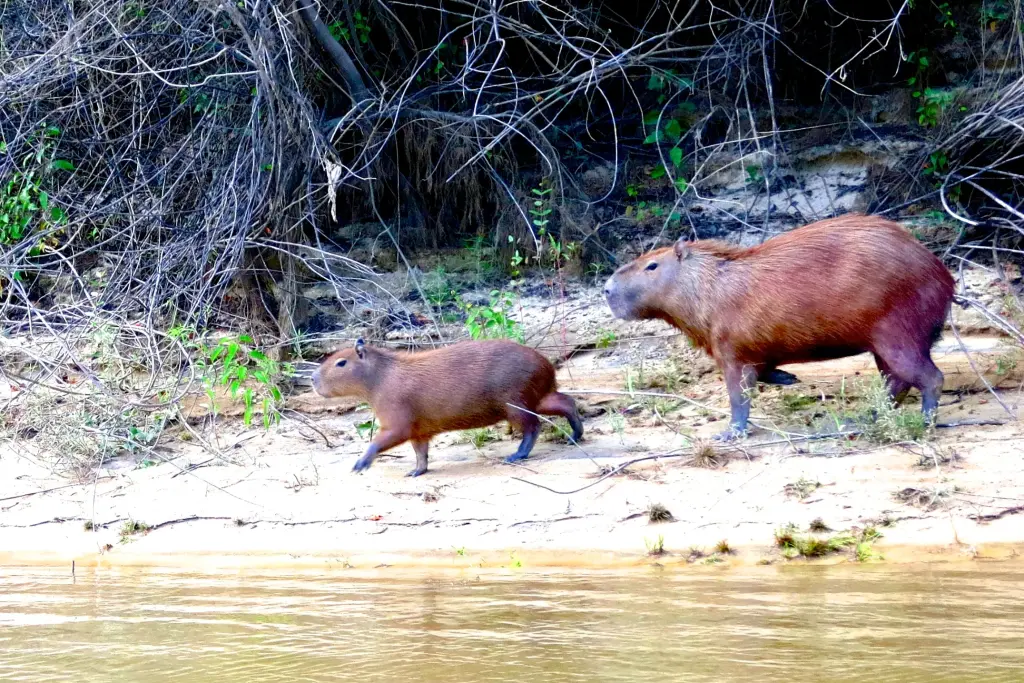
Photo: Capybara
Goliath Bird‑Eating Spider — The Forest Titan
The Goliath bird‑eating spider (Theraphosa blondi) is the world’s largest spider by weight, with a leg span approaching the size of a dinner plate. Despite its formidable name, it mostly preys on insects and small vertebrates. Expert naturalists at Rewa can guide visitors to their silk‑lined burrows for a rare close‑up encounter.
Best Place: Rewa Eco Lodge (Toucan Falls Trail)
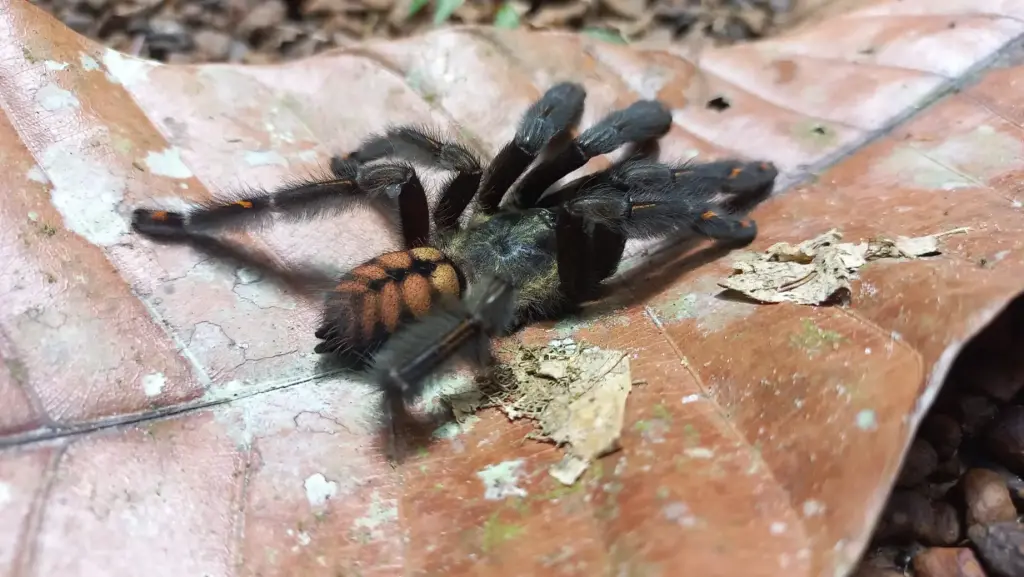
Photo: Goliath Bird‑Eating Spider – © Delon Williams
Victoria Amazonica — The National Flower of Guyana
The magnificent Victoria amazonica, Guyana’s national flower, produces vast leaves up to three metres wide—strong enough to support a small child. Its two‑day blooming cycle is a spectacle: white on the first night to attract beetles, pink on the second as it releases them dusted in pollen. Evening boat trips provide the best view of this remarkable transformation.
Best Places: Karanambu Lodge, Rewa Eco Lodge
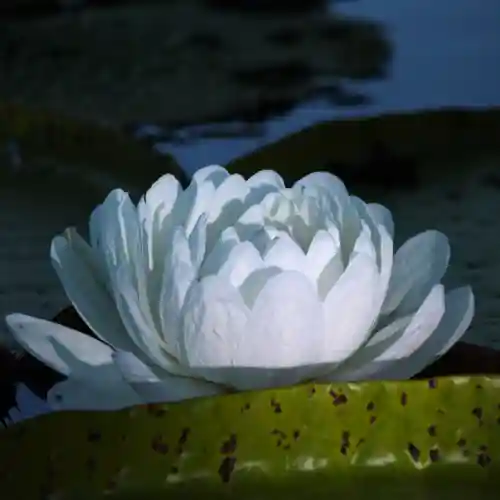
Photo: Victoria Amazonica
The Ten Giants of Guyana
Where to See the Giants: Location Guide
Guyana’s network of eco-lodges and wilderness camps provides strategic access to different giant species. Here’s your quick reference guide:
| Location | Giants You Can See | Region |
| Karanambu Lodge | Giant Otter, Giant Anteater, Jaguar, Black Caiman, Victoria Lily | North Rupununi |
| Iwokrama Reserve | Jaguar, Giant Otter, Black Caiman, Anaconda | Central Guyana |
| Rewa Eco Lodge | Arapaima, Anaconda, Goliath Spider, Giant Otter, Victoria Lily | Deep Interior |
| Surama Eco Lodge | Harpy Eagle, Giant Otter | Forest-Savannah Edge |
| Caiman House | Black Caiman, Giant Anteater | Yupukari Village |
| Waikin Ranch | Giant Anteater, Capybara | South Rupununi |
| Wichabai Ranch | Giant Anteater, Capybara | South Rupununi |
| Maparri Camp | Harpy Eagle, Goliath Spider | Kanuku Mountains |
Experience All the Giants: The Guyana Wildlife & Adventure Journey
To maximise your chances of encountering these giants, Wilderness Explorers has designed the ultimate expedition: the Guyana Wildlife & Adventure Journey (GWAJ). This 15‑day adventure connects Georgetown to the deepest interior, visiting Iwokrama (for jaguars and caimans), Surama (for harpy eagles), Rewa (for arapaima and spiders), and Karanambu (for otters and anteaters).
A highlight of the trip is active participation in the black caiman research project at Yupukari—helping scientists capture, measure, and tag these ancient reptiles. This isn’t passive observation; it’s a direct contribution to Guyana’s conservation legacy.
Explore the full itinerary: Guyana Wildlife & Adventure Journey
Guyana Wildlife: Frequently Asked Questions
Who are the major giants of Guyana?
Guyana’s true giants aren’t corporations or business empires—they’re the remarkable megafauna that make this country one of Earth’s last great wilderness frontiers. The ten giants include the jaguar (South America’s largest cat), giant river otter (the River Wolf), harpy eagle (the most powerful raptor), giant anteater, arapaima (largest scaled freshwater fish), black caiman (largest alligatorid), green anaconda (heaviest snake), capybara (largest rodent), Goliath bird‑eating spider (largest spider by mass), and Victoria amazonica (largest water lily). Wilderness Explorers has specialised in showcasing these giants since 1994.
What are the top Guyana‑based companies offering eco‑friendly experiences?
Wilderness Explorers, based in Georgetown since 1994, is Guyana’s leading eco‑tourism operator and destination management company. Rather than manufacturing physical products, we deliver sustainable wildlife experiences through a network of community‑owned lodges, including Rewa Eco Lodge (100% community‑owned), Surama Eco Lodge (indigenous Makushi community), and Caiman House (conservation research station). Our tours directly fund rainforest protection and support indigenous communities, making eco‑tourism Guyana’s most impactful sustainable export.
What are the best wildlife tours in Guyana for UK travellers?
For UK travellers, the Guyana Wildlife & Adventure Journey (GWAJ) offers the most comprehensive wildlife tour available. This 15‑day expedition covers all major ecosystems and giant species, with scheduled small‑group departures perfect for solo travellers or couples. Wilderness Explorers, established in Georgetown since 1994, specialises in serving visitors from the UK, Europe, and USA, handling all logistics including domestic flights, lodge transfers, and expert guides. UK visitors can book directly through wilderness‑explorers.com with full support from our team.
What are the top eco‑lodges in Guyana for wildlife watching?
Guyana’s premier wildlife eco‑lodges include:
- Karanambu Lodge (giant otters, giant anteaters, Victoria lilies)
- Iwokrama River Lodge (jaguars, black caiman, canopy walkway access)
- Rewa Eco Lodge (arapaima, anacondas, Goliath spiders—100% community‑owned)
- Surama Eco Lodge (harpy eagles, indigenous Makushi culture)
- Caiman House Field Station (black caiman research participation)
Each lodge offers unique wildlife encounters and directly supports conservation. Wilderness Explorers partners with all these properties and can create bespoke itineraries based on your target species.
What is the best tour for seeing giant river otters in Guyana?
The Guyana Wildlife & Adventure Journey (GWAJ) is the premier tour for giant river otter encounters. Karanambu Lodge is synonymous with these otters due to the pioneering rehabilitation work of the late Diane McTurk—wild populations here are habituated to boats, allowing intimate observations. Rewa Eco Lodge offers undisturbed family groups on low‑traffic rivers. Iwokrama River Lodge and Surama Eco Lodge provide additional sighting opportunities.
How do I book guided jungle safaris in Guyana?
Book guided jungle safaris directly through Wilderness Explorers at wilderness‑explorers.com. We offer scheduled small‑group departures throughout the year, or private custom tours for families and groups. The process is straightforward: browse our tour options, check availability, and submit an enquiry. Our team will confirm dates, provide a detailed itinerary, and manage all logistics including domestic flights, lodge reservations, and expert naturalist guides.
What is the Guyana Wildlfe and Journey itinerary?
The Guyana Wildlife & Adventure Journey is Wilderness Explorers’ flagship 15‑day expedition covering Guyana’s premier wildlife destinations. The itinerary includes: Georgetown city tour, flight to Kaieteur Falls (world’s tallest single‑drop waterfall), Iwokrama Rainforest Reserve (jaguar territory, canopy walkway), Atta Rainforest Lodge, Rewa Eco Lodge (arapaima, anaconda, Goliath spiders), Karanambu Lodge (giant otters, giant anteaters, Victoria lilies), and Caiman House (black caiman research). This comprehensive journey visits all locations needed to encounter the ten Giants of Guyana.
Which companies offer wildlife conservation tours in Guyana with ethical practices?
Wilderness Explorers is Guyana’s leading ethical wildlife tour operator, partnering exclusively with community‑owned and conservation‑focused lodges. Our tours directly fund: Rewa Village’s arapaima protection programme (replacing poaching with tourism income), Caiman House’s black caiman research, Wichabai Ranch’s giant anteater tracking, and indigenous Makushi communities at Surama. We adhere to strict ethical viewing guidelines—no baiting, no harassment, appropriate distances. Tourism revenue remains in local communities, making every booking an investment in conservation.
When is the best time to see rare animals in Guyana’s rainforests?
The optimal times for wildlife viewing in Guyana are the dry seasons: February to April and September to November. Animals concentrate around water sources during these periods, dramatically increasing sightings of jaguars, giant otters, and other giants. Dry conditions also improve road access to remote lodges and provide clearer weather for the Kaieteur Falls overflight. Wilderness Explorers schedules Guyana Wildlife & Adventure Journey departures during these peak wildlife months.
What wildlife spotting gear do I need for a Guyana trip?
Essential gear for wildlife watching includes:
- Quality binoculars (8×42 or 10×42 recommended)
- Waterproof camera with telephoto lens
- Headlamp for night walks and caiman spotting
- Lightweight quick‑dry clothing in neutral colours
- Insect repellent
- Waterproof daypack
Wilderness Explorers provides detailed packing lists upon booking. Most specialised gear is available from outdoor retailers like Cotswold Outdoor (UK), REI, or Amazon. See why travellers choose us for more preparation advice.
Ready to Meet the Giants?
Guyana remains one of Earth’s last true wilderness frontiers—a place where the giants still roam free. With over 30 years of experience leading expeditions into this remarkable country, Wilderness Explorers is your gateway to encounters that will stay with you forever.
Explore the Guyana Wildlife & Adventure Journey and discover why Guyana’s giants are the real wealth of this extraordinary nation.
Ready to book? Contact Wilderness Explorers or explore our full range of Guyana tours.