info@wilderness-explorers.com

+(592) 226-2085 (Office)

+(592) 624 2225 (Emergency)

Birding Guyana

10

Days

About This Tour

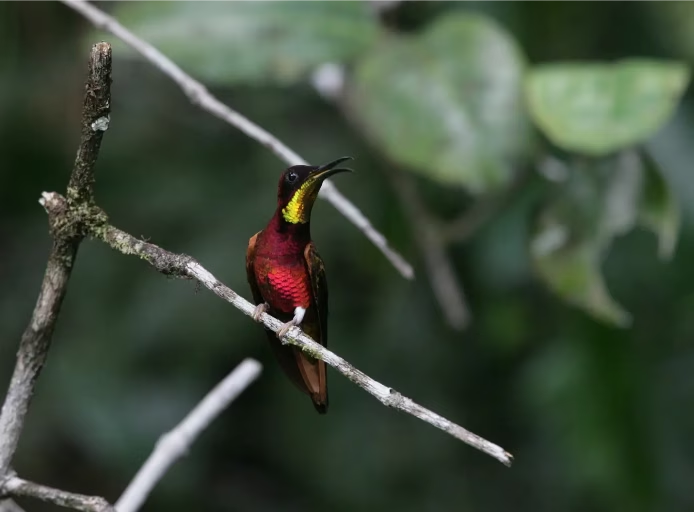
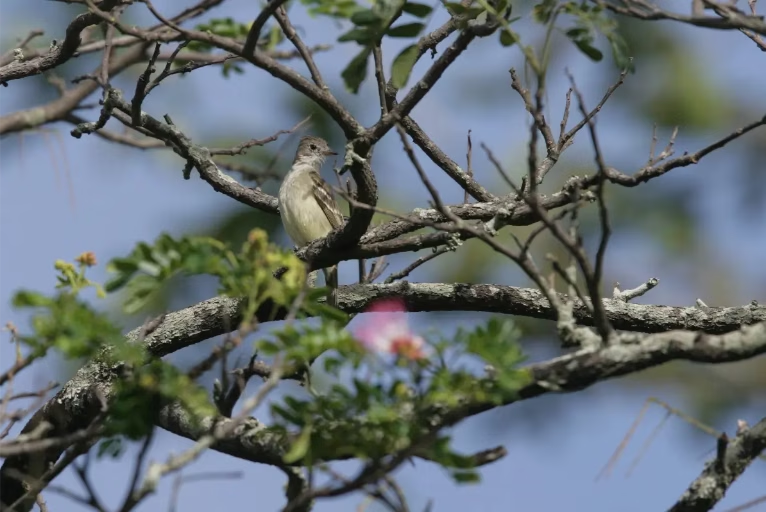
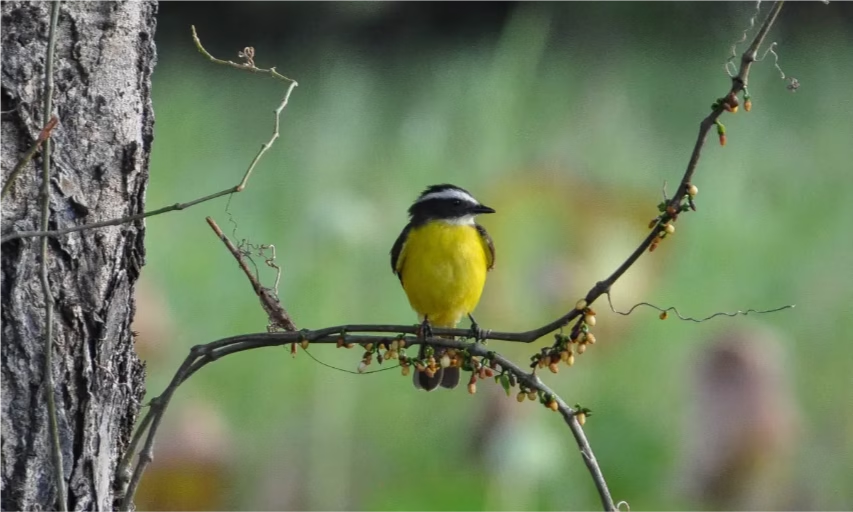
Discover Guyana’s incredible birdlife on this 10-day birding adventure through rainforests, rivers, and savannahs. Beginning in Georgetown and travelling deep into the Iwokrama Rainforest, Atta Rainforest Lodge, Surama Eco-lodge, and Karanambu Lodge, the journey is designed to maximise opportunities to encounter over 800 bird species, including more than 30 Guiana Shield endemics.

Highlights include searching for Harpy Eagle, Guianan Cock-of-the-rock, Crimson Fruitcrow, Rufous Crab-hawk, Blood-coloured Woodpecker, and the elusive White-winged Potoo. Birders also have the chance to encounter Giant River Otters, Black Caiman, and even Giant Anteaters during savannah explorations.

Community-owned lodges ensure authentic cultural connections with Makushi and Wapishana communities, while optional extensions offer opportunities to spot the critically endangered Sun Parakeet, Red Siskin, Hoary-throated Spinetail, and Rio Branco Antbird near the Brazilian border.

This journey is ideal for both seasoned birders and nature enthusiasts looking for an experience of one of South America’s last great wilderness areas.

Ready for another birding adventure? Explore the Birds of Guyana today.

Download the full itinerary to see the optional pre-tour and post-tour.

5400

Itinerary

Expand all
Day 01 : Sunday - Arrival in Georgetown

We will pick you up at the airport, and then transfer you to your selected hotel.

Cara Lodge was built in the 1840s. It has a long and romantic history and was the home of the first Lord Mayor of Georgetown. Over the years, the property has been visited by many dignitaries including King Edward VIll who stayed at the house in 1923. Other dignitaries have included President Jimmy Carter, HRH Prince Charles and Mick Jagger. This magnificent wooden colonial home turned hotel offers the tradition and nostalgia of a bygone era.

Overnight at Cara Lodge. (Check in time 1400hrs, Check out time 12midday)

Day 02 : Monday - Fly to Iwokrama Rainforest

0730hrs pickup and transfer to Eugene F. Correia International Airport.

Board schedule flight for journey over hundreds of miles of tropical rainforest to land at Fair View Airstrip. (Check in time 0730hrs, Departure 0900hrs)

Pick up from Fair View airstrip and transfer to Iwokrama River Lodge.

The Iwokrama Rainforest is a vast wilderness of one million acres.  This protected area was established in 1996 as the Iwokrama International Centre for Rainforest Conservation and Development.  The Iwokrama Forest is in the heart of one of four last untouched tropical forests of the world - The Guiana Shield of North-Eastern South America. Iwokrama was established as a living laboratory for tropical forest management.

The forest is in the homeland of the Makushi people, who have lived here and used the forest for thousands of years.

The Iwokrama River Lodge is set overlooking the Essequibo River.  Accommodation is offered in eight spacious timber cabins with verandas overlooking the river. Electricity is provided by a combination of solar and diesel generator systems, and limited wireless internet access is provided for free in the main building. Meals are served buffet-style in the Fred Allicock dining hall.

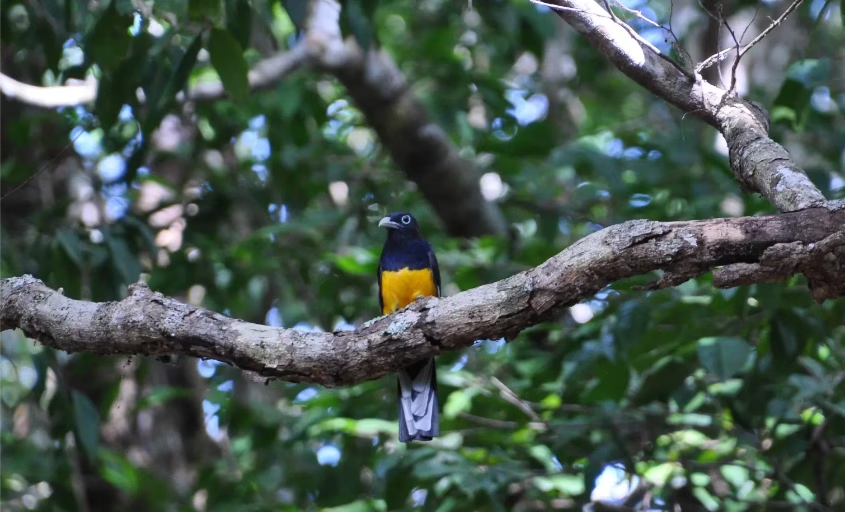
Explore the trails around the lodge with an Iwokrama Ranger.  Iwokrama is home to many bird species including Capuchin bird, Black Nunbird, Chestnut-rumped Woodcreeper, Amazonian Antshrike, Brown-bellied Antwren, Spot-tailed Antwren, Todd’s Antwren, Spotted Puffbird, Green Aracari, Guianan Toucanet, Guianan Red Cotinga, Pompadour Cotinga, Rufous-crowned Elaenia, Bronzy Jacamar, Chestnut & Waved Woodpecker, Gray Antbird, and Strong-billed Woodcreeper.  Three other Neotropical species in the Iwokrama forest of high interest are White-winged Potoo, Rufous Potoo, and Rufous-winged Ground-cuckoo.

The forest is also home to many mammals and you may see Red-rumped Agouti and various species of monkey including Red Howler, Black Spider, Wedge-capped and Brown Capuchins.

After dark we’ll set out on the river, in hope of finding one or another of its four species of caiman, and listen for night birds such as Spectacled Owl, White-winged Potoo, Rufous Potoo, Long-tailed Potoo, Zigzag Heron or Blackish Nightjar. Using our flashlights, we will look for the eyeshine of snakes including Cox boa, tree frogs and if lucky maybe some mammals.

Overnight at Iwokrama River Lodge.

Breakfast + Lunch + Dinner
Day 03 : Tuesday - Essequibo River, Turtle Mountain & Kurupukari Falls

Making an early start, we’ll embark on the Essequibo and circumnavigate nearby Indian House Island, keeping an eye out for birds along the river banks. Return to the River Lodge for breakfast.

Leave the lodge by boat, birdwatching along the way, for the hike to Turtle Mountain.  A well-maintained trail winds through the forest before an exhilarating climb up the mountain to its summit at 935ft (approx. 360m). The effort is more than worth it for the breathtaking views over the forest canopy when you get there and chances of Green Aracari, White Bellbird or a fly-by of one of five types of eagles.  This trail is also a great location for seeing Black Spider and Red Howler monkeys. If you think this hike may be too strenuous you can take an alternative boat trip to Stanley Lake to search for Giant River Otters and Black Caiman.

As the afternoon cools you set out on a boat trip to visit Kurupukari Falls to see the Amerindian petroglyphs (dependent on the water level).

Overnight at Iwokrama River Lodge

Breakfast + Lunch + Dinner
Day 04 : Wednesday - Mori Scrub, Jaguar Trail & Atta Rainforest

Transfer before dawn to visit a special area of habitat known as Mori scrub, characterized by an unusual low, sandy forest which supports an unusual assemblage of birds and other mammals.

Continue the transfer by vehicle along the trail that is one of the best places to see the elusive Jaguar. No promises, but many have been lucky!  Along the road, we will watch for the myriad of bird species that frequent the forest edge, including the magnificent Harpy Eagle. This road is the only north – south access in Guyana and links the country to Brazil.  Even so traffic is only very occasional and wildlife is often seen along the road. The journey concludes at the Atta Rainforest Lodge, home of the Iwokrama Canopy Walkway.

The Iwokrama Canopy Walkway is situated near the southern boundary of the Iwokrama Reserve in central Guyana. The walkway has four suspension bridges leading to three platforms, the highest of which is over 30 metres above the ground.   

Another area where we will want to spend some time is the clearing around the lodge, as this is one of the best places to see another of Guyana’s “must see” birds, the Crimson Fruitcrow.  The clearing is also a reliable site for Black Curassow as there is a large and growing family party which has become habituated to people and regularly passes through the clearing.    

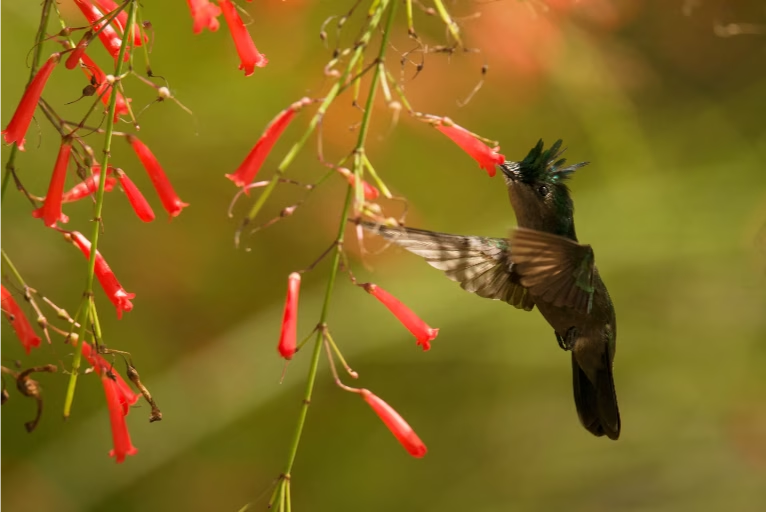
Atta Rainforest Lodge is 500 metres from the base of the Iwokrama Canopy Walkway, offering comfortable private-room accommodation with ensuite bathrooms, delicious home-cooked meals, and traditional Amerindian hospitality.  The communal building houses the bar, dining area and kitchen and is open sided with views across the gardens to the towering forest, which completely surrounds the lodge.  Hammocks and outdoor benches enhance the lovely gardens which include varieties of heliconias that attract over ten different hummingbirds, close enough for the perfect photo.

Overnight at Atta Rainforest Lodge

Breakfast + Lunch + Dinner
Day 05 : Thursday - Iwokrama Canopy Walkway Birding

Before dawn we will return to the canopy where we can birdwatch easily and may see Rufous-throated Sapphire, Green Aracari, Pygmy Antwren and Guianan Streaked-Antwren. With some luck Guianan Toucanet, Pompadour Cotinga, Buff-cheeked Greenlet and a host of crown specialists may come within our view.  From this tree top vantage, you can sometimes see Red Howler and Black Spider Monkeys.

Apart from the Iwokrama Canopy Walkway itself you can enjoy wildlife and birdwatching walks on the trails around the area. Many bird species, stunning insects, noisy amphibians, and playful primates make the surrounding forest their home. Deer, Tapir and agouti are also regular visitors to the lodge.  Serious birders will want to search the undergrowth for the rarely seen Rufous-winged Ground-cuckoo.

As darkness falls on the canopy walkway, you may see the White-winged Potoo.  Night walks are also possible and something interesting or new always seems to pop on to the scene including one of the six different cats to be found along the transnational road near the lodge.

Overnight at Atta Rainforest Lodge..

Breakfast + Lunch + Dinner
Day 06 : Friday - Cock-of-the-rock Trail & Surama Village

Welcome the dawn chorus from the canopy walkway and then return to the lodge for breakfast before departure.

Transfer from Atta Rainforest Lodge through the rainforest Corkwood in the Iwokrama Forest.  Here there is a comparatively short trail to hopefully see the amazingly brilliant Guianan Cock-of-the-rock. This trail is through interesting and pristine rainforest and the guides can explain how the plants are used for medicine and other purposes.

We will then continue on to the Indigenous community of Surama.

The Indigenous community of Surama is located in the heart of Guyana. The village is set in five square miles of savannah which is ringed by the forest-covered Pakaraima Mountains.  The villagers of Surama are mainly from the Macushi tribe. The Surama Eco Lodge is owned and operated by the entire community. The Village Council serves as the Board of Directors, and through consultation, they decide how the profits from the tourism business are to be spent to benefit the entire community.

On arrival in Surama, you will receive a warm welcome and settle into your accommodation. A guide will escort you for a short walk on trails to observe the forest and bird life.  The nearby forests are certainly amongst the best places in the Neotropics to look for birds. We also plan to do some night birding and hope to locate the recently split Northern Tawny-bellied Screech-Owl, as well as Tropical Screech-Owl, Lesser Nighthawk, White-tailed Nightjar and both Great and Common Potoos.

Overnight at Surama Eco-Lodge

Breakfast + Lunch + Dinner
Day 07 : Saturday - Surama Birding & Burro Burro River

This morning, we will be up early looking for birds around Surama. During our stay we will hope to encounter Red-legged Tinamou, Painted Parakeet, Dusky Parrot, Lilac-tailed Parrotlet, Pale-throated Barbthroat, Rufous-throated Sapphire, Guianan Puffbird, Northern Slaty-antshrike, Rufous-bellied Antwren, White-browed, White-bellied & Ferruginous-backed Antbirds, Lemon-chested & Ashy-headed Greenlets and Finsch’s Euphonia.

Lunch at the lodge and then take a three mile walk across the savannah and through the rainforest to the Burro Burro River. Your guides will then paddle you on the river for opportunities to observe Giant River Otters, Tapir, Tayra, Spider Monkeys and many more species.

Optional Service (not included in package rate): Visit to the Harpy Eagle site

Number of Persons: 2 4 6
Rate p/p US$: 115.00 70.00 80.00

The Harpy Eagle, also known as the “flying wolf” is one of the largest eagles in the world.  Now considered a near-threatened species, the eagle still has a refuge in Guyana. Today when we journey on the Burro Burro River, we will visit an active harpy nest where we will have a very good chance to view this amazing bird of prey. Return to the lodge for sunset. 

Overnight at Surama Eco-Lodge

Breakfast + Lunch + Dinner
Day 08 : Sunday - Rupununi Savannah & Karanambu Lodge

Enjoy dawn breaking across the rainforest.  You can choose from a forest walk to look for wildlife and birds or relax around the lodge before breakfast and departure.

Transfer by vehicle from Surama Eco Lodge to Ginep Landing.

We will transfer through the savannah and the foothills of the Pakaraima Mountains with excellent opportunity for savannah birding.  Jabiru Stork are often seen along this stretch of road.  This area is the North Rupununi Savannah which is to Guyana what the Gran Sabana is to Venezuela, an extensive area of grassland with termite mounds and scattered or riparian woodland.  It differs in that much of it is devoted to cattle raising, though the large ranches are not very productive.  Indeed, one can travel for hours without seeing a domestic animal of any sort. Needless to say, the birdlife here is markedly different from that of the rainforest. Nearby patches of light forest are home to certain ant birds and flycatchers, and of course the grasslands support an avifauna of their own.

From Ginep Landing we take a boat trip on the Rupununi River to Karanambu Lodge. Depending on the river level, this trip offers an excellent opportunity to look for Giant Otters as there are several family groups which live along this stretch of the Rupununi River.

Karanambu, a 110-square mile former cattle ranch located in the North Rupununi, was the home of the late Diane McTurk, conservationist and a world-renowned expert on giant otters. Known for its expansive wetlands and savannah, as well as its biological and cultural diversity, Karanambu encompasses savannah, marshy ponds, riparian forest, and a 30-mile stretch of the Rupununi River. The number of species found here is much higher than expected given its size with at least 600 species of bird, and over 200 species of mammals. The seasonally flooded savannahs and forests also draw substantial fish migrations with as many as 700 species of fish — more than anywhere on Earth.

This region is rich in history and is the homeland of the Makushi and earlier peoples dating back more than 7,000 years. Several prominent explorers and naturalists have written about their experiences here, including Robert and Richard Schomburgk, Charles Waterton, Evelyn Waugh, and Gerald Durrell. A very young David Attenborough spent time here and wrote about it in his early book, “Zoo Quest to Guiana”.

With both the river and savannahs close at hand there is a wide variety of activities to be enjoyed at Karanambu. Two guided excursions are provided each day — one early in the morning and another late in the afternoon and into the evening. As well as being the coolest times to be out, these are usually the best times to see the different birds and animals. Trips may be on the river by boat, on the savannahs by 4 by 4 or along forest trails on foot to the different ponds in the area.

Late in the afternoon we will travel by boat to look for wild Giant River Otters and as dusk falls to the ponds to see the giant Victoria amazonica waterlily, bloom at dusk. On the return trip we will spotlight for Black Caiman and night birds and on a good evening it is possible to see at least six species of nightjar and nighthawk including Nacunda, Least and Lesser Nighthawks, White-tailed Nightjar, as well as Double-striped Thick-knee.

Accommodations are in traditionally made clay brick cabins, each with en suite and veranda with hammocks.

Overnight at Karanambu Lodge

Breakfast + Lunch + Dinner

Day 09 : Monday - Giant Anteater Safari & Karanambu Birding

This morning, we make an early start to an area of rolling grasslands, home to a population of giant anteaters. With luck we shall locate one of these six-foot long animals excavating its breakfast from one of the termite mounds that stud the savannah. Though giant anteaters live in overlapping home ranges they are mostly solitary except during mother-offspring relationships, aggressive interactions between males, and when mating. Mother anteaters carry their offspring on their backs until weaning them.

Evening river excursion or if you are interested in bird watching you can explore woodland patches or gallery forest along the river where we’ll hope to find a variety of species. On the lily black growned pads we will look for Jacanas, Purple and Azure Gallinules, Black-crowned Night Herons, Tiger Herons and a host of other birds.  A feature bird for the area is the Agami Heron. An evening walk along the airstrip offers seven species of nightjar and among the grasslands the Double-striped Thick-knees. 

Overnight at Karanambu Lodge.

Breakfast + Lunch + Dinner

Day 10 : Tuesday - Karanambu Birding, Lethem Flight & Botanical Gardens

Early morning birding around Karanambu Lodge or for those interested there is also the opportunity to travel out onto the savannah to look for two hard to get species. The Bearded Tachuri and the Crested Doradito and maybe even a Giant Anteater.

Transfer by vehicle from Karanambu Lodge across the savannah to Lethem.

Scheduled flight to Eugene F. Correia International Airport.

Pickup at Eugene F. Correia International Airport and transfer to Georgetown and your selected hotel.

1500hrs pickup and transfer to the extensive Georgetown Botanical Gardens where, if we are lucky, we will have views of the Blood-colored Woodpecker. This colorful Veniliornis is found only in the Guianas and even there almost wholly limited to the narrow coastal plain. The gardens host Snail Kite, Gray Hawk, Pearl Kite, Carib Grackle, Red-bellied and Red-shouldered Macaws and the rare festive parrots. We will walk on trails in the back of the gardens and may see Yellow-chinned Spinetail, Black-crested Antshrike, Silver-beaked Tanager, Buff-breasted Wren, White-bellied Piculet and Ashy-headed Greenlet. You may even want to take a break from birding to feed some manatees in one of the nearby ponds.

Return to your hotel.

Overnight at Cara Lodge. (Check in time 1400hrs, Check out time 1200hrs midday)

Breakfast
Day 11 : Wednesday - Departure from Guyana

Pickup and transfer to Cheddi Jagan International Airport for your departing flight.

Breakfast

Pre-Tour & Post-Tour Itinerary

Kaieteur Falls and Abary Pre-Tour Extension

Friday: Arrival in Guyana

Arrive in Guyana and transfer to Georgetown and to your selected hotel.

Cara Lodge was built in the 1840s. It has a long and romantic history and was the home of the first Lord Mayor of Georgetown. Over the years, the property has been visited by many dignitaries including King Edward VIll who stayed at the house in 1923. Other dignitaries have included President Jimmy Carter, HRH Prince Charles and Mick Jagger. This magnificent wooden colonial home turned hotel offers the tradition and nostalgia of a bygone era.

Overnight at Cara Lodge. (Check in time 1400hrs, Check out time 12midday)

Saturday: Mahaica River Birding & Optional Demerara River Tour

0430 – 0445hrs pickup by your guide and driver at Cara Lodge and travel eastward from Georgetown along the Atlantic coast to the Mahaica River.

The narrow winding road to the landing runs parallel to the river and takes us through an area that is mainly used for the cultivation of rice and other crops. Fortunately for us, the area along the river has been well preserved and provides an excellent riverfront ecosystem inhabited by flocks of egrets, herons, ibis, various marsh tyrants, and Guyana’s national bird, the Hoatzin. Howler Monkeys also frequent these riverside trees. Giant River Otters are also often seen in the river.

Upon arrival at the river landing, you may enjoy a cup of coffee or tea before heading out onto the river. The river offers a rare chance to see the range-restricted Blood-colored Woodpecker which has been badly affected by habitat loss in the ‘Guianas’ coastal region.

This river is one of the best places to spot Guyana’s national bird, the Hoatzin (Opisthocomus Hoatzin), also known as the Stinkbird, or “Canje Pheasant”. This odd bird is an unusual species of tropical bird found in swamps, riverine forest and mangrove between the Amazon and the Orinoco delta in South America. It is a pheasant-sized bird about 65 cm (25 in) long, with a long neck and small head. The Hoatzin is herbivorous; it eats leaves and fruit, and has an unusual digestive system with an enlarged crop which functions as a rumen. It also produces a horrible smell to scare away potential predators, hence one of its local names.

After our tour we will have breakfast before returning to Georgetown. On the way we will make a brief stop to look for shore birds on the mudflats beyond the seawall. Flocks of Scarlet Ibis, Herons and Egrets are common here as is the rare endemic Rufous Crab-Hawk.

Optional Service: Scarlet Ibis Birding Tour

Not included in package rate

Number of Persons: 2 – 6
Rate p/p US$: 60.00

We will travel to the Demerara River and if the tide is out, it exposes the mud flats which normally host feeding Scarlet Ibis, Little Blue and Tricolored herons, while Magnificent Frigatebirds take to the air and we will search for other shorebirds.

Optional Service: Demerara Historical River Tour

Not included in package rate

Number of Persons: 2 4 6
Rate p/p US$: 270.00 180.00 150.00

This afternoon we will take a drive through the heart of the city to the Stabroek Market area. Here we will join the afternoon commuters using the old ferry stelling to board the river taxis which are used to cross the Demerara River. The river taxis are a faster alternative route to using the Demerara Harbour Bridge.

We will slowly cruise along and across the Demerara River while your guide will give a brief history of the famous buildings along the waterfront. We then continue our trip to see the Demerara Harbour Bridge, once the longest floating bridge in the world at a total length of 1,851m long. We will cross under the bridge and tie up our boat near a mangrove that is the nightly roost for a variety of birds. As the sun sets over the river, we will have a cold drink and some snacks (or cutters as we call them here in Guyana) as we enjoy flocks of brilliant Scarlet Ibis, Snail Kites, Herons, and three kinds of Egrets as they fly across the sky and settle into the mangroves for the evening.

Soon after the sun sets, we return to the ferry stelling while enjoying the city and ship lights from the river.

Overnight at Cara Lodge. Breakfast

Sunday: Kaieteur Falls Scenic Flight

Breakfast at the hotel.

1145hrs pickup and transfer to Eugene F. Correia International Airport.

From the Eugene F. Correia International Airport take a scheduled flight over hundreds of miles of unbroken tropical rainforest to land at Kaieteur Falls, the world’s highest free-falling waterfall.

Kaieteur which was first seen by a European on April 29, 1870 is situated in the heart of Guyana on the Potaro River. The water of Kaieteur flows over a sandstone conglomerate tableland into a deep gorge – a drop of 741 feet or 5 times the height of Niagara Falls.

There are no other falls in the world with the magnitude of the sheer drop existing at Kaieteur. Amerindian legend of the Patamona tribe has it that Kai, one of the tribe’s chiefs (after whom the falls is named), committed self-sacrifice by canoeing himself over the falls. It was believed this would encourage the Great Spirit Makonaima to save the tribe from being destroyed by the savage Caribishi.

Kaieteur supports a unique micro environment with Tank Bromeliads, the largest in the world, in which the tiny Golden frog spends its entire life and the rarely seen Guiana Cock- of-the-rock nesting close by. The lucky visitor may also see the famous Kaieteur Swifts or Makonaima Birds which nest under the vast shelf of rock carved over millions of years by the black water of the Potaro River.

Condition of Sale

Flights to Kaieteur Falls are operated on chartered aircraft and all flights have a minimum passenger restriction. Therefore, any booking to Kaieteur and Orinduik Falls is subject to a minimum of 12 passengers being available to travel. In most cases we are able to fill flights, especially if scheduled for a weekend. However, in the rare case that we cannot meet the required numbers we will reschedule the trip to another day during your stay, if this is possible. Wilderness Explorers retains the right to reschedule a flight as a first option. If we cannot reschedule the flight Wilderness Explorers will guarantee a flight, with a minimum of 2 passengers, to Kaieteur Falls only. If a flight is cancelled due to circumstances beyond our control, such as weather, we will endeavour to reschedule the flight during your itinerary. If this is not possible then a full refund on the flight will be made.

Pickup and transfer from Eugene F. Correia International Airport to Georgetown and to your selected hotel. Overnight at Cara Lodge. Breakfast and snack on the Kaieteur Falls tour.

Sun Parakeet and Remote Specialities Post-Tour Extension

Tuesday: Sun Parakeet Search & Karasabai

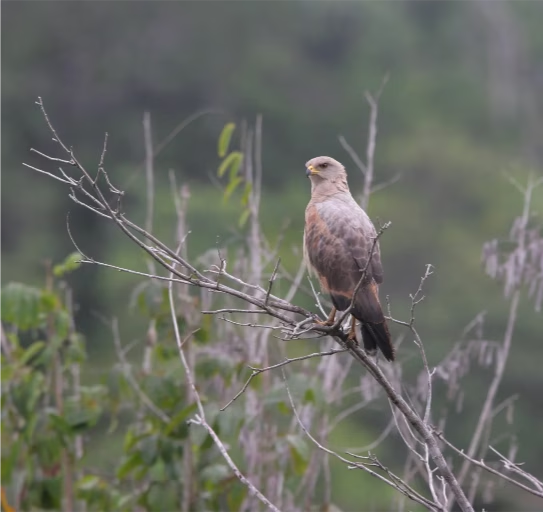
This morning we will undertake the arduous drive from Karanambu towards Karasabi over rough road passing across the Rupununi Savannah that stretches across the central ranges of Guyana. Here Aplomado Falcons hunt over the expansive plains and Grassland Yellow Finch mix with a variety of seedeaters including Grey, Plumbeous, Yellow-bellied, and Ruddy-breasted. Sightings of Savannah and White-tailed Hawks will see us through the Pakaraima Mountains and finally to the scattered village of Karasabi.

We will take time to visit with some of the locals and secure final permissions since there are very few visitors to this region and we want to secure future relations and conservation efforts since the villagers ultimately control the fate of the Sun Parakeet. This morning, we will embark on a journey between the scenic mountains that border Guyana. This remote area is the only known site and possibly the only place left on earth where the critically endangered Sun Parakeet still survives in the wild. This vivid species once ranged widely across Suriname into northern Brazil but after years of feverish illegal trapping including rumours of entire planes jammed full with thousands of ill-fated birds, the world population now hangs in the balance with less than two hundred individuals thought to be remaining but numbers here are on the increase because of the conservation efforts of the people of Karasabai. We stand a very high likelihood of encountering these colourful parakeets as they fly through the valley and feed on the fruits of surrounding trees. The intense combination of yellow and red shared with the sheer sensation of watching one of the rarest and most beautiful birds on earth is an incredible experience that we will never forget.

Other more widespread birds we might encounter here include Yellow-breasted and Streaked Flycatchers, Hooded Tanager, Small-billed Elaenia, Brown-crested Flycatcher, Red-eyed Vireo, Hepatic Tanager, and Green-rumped Parrotlet.

We will then transfer to Manari Ranch.

This atmospheric and stylish ranch is noticeably less rustic than the others, having been renovated by dynamic owner Lisa Melville. Just a 15-minute drive north from Lethem, it’s also a good alternative to staying in town. Enjoy the great swimming hole and a laid-back vibe. Overnight at Manari Ranch. BLD

Wednesday: Red Siskin Expedition

Another extremely early start awaits us, as we will be travelling several hours through the south savannahs to look for the highly endangered Red Siskin. This bird has benefited from the extensive work of the South Rupununi Conservation Society. [SRCS]. You will meet a representative who will fill you in on the continuing work of the society with the red siskin and also the giant Anteater. There should also be time for some further birding in the area and species we could encounter include American Wood Stork, Buff-necked Ibis, White-tailed Hawk, Red-bellied Macaw, White-fringed Antwren, Yellow-bellied Elaenia and Red-breasted Blackbird. Return to Manari Ranch. Overnight at Manari Ranch. Breakfast+Lunch+Dinner

Thursday: Hoary-throated Spinetail, Rio Branco Antbird & Return to Georgetown

Today, we will be turning our attention to two birds which have exceedingly restricted ranges, the Hoary-throated Spinetail and Rio Branco Antbird. Both are only found in gallery forest along the Rio Branco and its main tributaries, all of which ultimately flow into the Amazon. Recent agricultural pressures have seriously reduced the amount of available habitat for both birds, and as a result the spinetail is now classified as endangered with the antbird treated as near-threatened. Along our journey we might come across Maguari Stork resting on the sandbanks, Muscovy Duck, and peculiar Capybara before reaching our site along a comparatively short stretch of the river. We will specifically target the Hoary-throated Spinetail and Rio Branco Antbird in this area although other interesting species we might find during our search include Fiery-shouldered Parakeet, Pale-legged Hornero, Velvet-browed Brilliant, Chestnut-vented Conebill, Roraiman Antwren, and Great Elaenia. Very few birders have ever ventured to this remote area so a few avian surprises are certainly not out of the question.

Transfer to the airstrip for scheduled flight back to Georgetown. Overnight at Cara Lodge. Breakfast+Lunch

Friday: International Departure

Transfer to the international airport for the flight home. Breakfast

Inclusions

Cost Includes

  • Airport transfers
  • Double or twin accommodation
  • Meals as listed
  • All road & river transfers
  • Internal flights
  • Activities as described
  • Local guides
  • Iwokrama Forest User fee
  • Iwokrama Canopy Walkway Fee

Cost Excludes

  • Items of a personal nature
  • Alcoholic drinks
  • International flights
  • Visa

Overall Trip Rating:

Total Reviews

0
Write a Review

Average Rating

0.0

No reviews yet for this tour.

★ 5 0
★ 4 0
★ 3 0
★ 2 0
★ 1 0
No reviews yet for this tour. Be the first to write a review.

Write a Review

Share your experience with this tour. Reviews are checked before being published.
Your Name *
Your Email *
Country
Rating *
Review Title
Your Review *
Date of Experience

Send your booking request via the form below

First Name *
Last Name
Email *
Phone / WhatsApp
Number of Travellers
Preferred Travel Date
Message *

From
USD 5400
/ Per Person (for a group of 6 pax)

Need Help with booking? Send Us A Message

Rates

Birding Guayan Rate 2026

Minimum Persons Price (USD)/Person
6 Persons $5,400
4 Persons $5,455
2 Persons $6,865

Pre-Tour Rate (Optional) 2026

Minimum Persons Price (USD)/Person
6 Persons $1,240
4 Persons $1,340
2 Persons $1,660

Post Tour Rate (Optional) 2026

Minimum Persons Price (USD)/Person
6 Persons $1,975
4 Persons $2,100
2 Persons $2,440

Birding Guayan Rate 2027

Minimum Persons Price (USD)/Person
6 Persons $5,680
4 Persons $5,730
2 Persons $7,210

Pre-Tour Rate (Optional) 2027

Minimum Persons Price (USD)/Person
6 Persons $1,245
4 Persons $1,370
2 Persons $1,670

Post Tour Rate (Optional) 2027

Minimum Persons Price (USD)/Person
6 Persons $2,125
4 Persons $2,260
2 Persons $2,635

Tour Facts

Language of guides
English
Length of trip
11 Days/10 Nights (Without Pre-Tour and Post-Tour)

Featured Tours

Featured

USD 5375

Wild Coast Tour: Guyana, Suriname & French Guiana– 2026

11
Days

Featured

USD 4030

Guyana Highlands Trekking Adventure

8
Days

Featured

USD 460

Kaieteur and Orinduik Falls Tour

8
Hours
true
Birding Guyana 2026 Rate 6865 6862 6865 6865 5455 5455 5400
Birding Guyana 2026 Pre-Tour Rate (Optional) 1660 1660 1660 1660 1340 1240 1240
Birding Guyana 2026 Post-Tour Rate (Optional) 2440 2440 2440 2440 2100 2100 1975
Birding Guyana 2027 Rate 7210 7210 7210 7210 5730 5730 5680
Birding Guyana 2027 Pre-Tour Rate (Optional) 1670 1670 1670 1670 1370 1370 1245
Birding Guyana 2027 Post-Tour Rate (Optional) 2635 2635 2635 2635 2260 2260 2125
true
Single Supplement Price 2026
755
Selectable Quantity
Birding Guyana Pre Tour Supplement Price 2026
275
Selectable Quantity
Birding Guyana Post Tour Supplement Price 2026
60
Selectable Quantity
Birding Guyana Supplement Pice 2027
790
Selectable Quantity
Birding Guyana Pre Tour Supplement Price 2027
275
Selectable Quantity
Birding Guyana Post Tour Supplement Price 2027
80
Selectable Quantity
Wilderness Explorers
Privacy Overview

This website uses cookies so that we can provide you with the best user experience possible. Cookie information is stored in your browser and performs functions such as recognising you when you return to our website and helping our team to understand which sections of the website you find most interesting and useful.