
About this trip
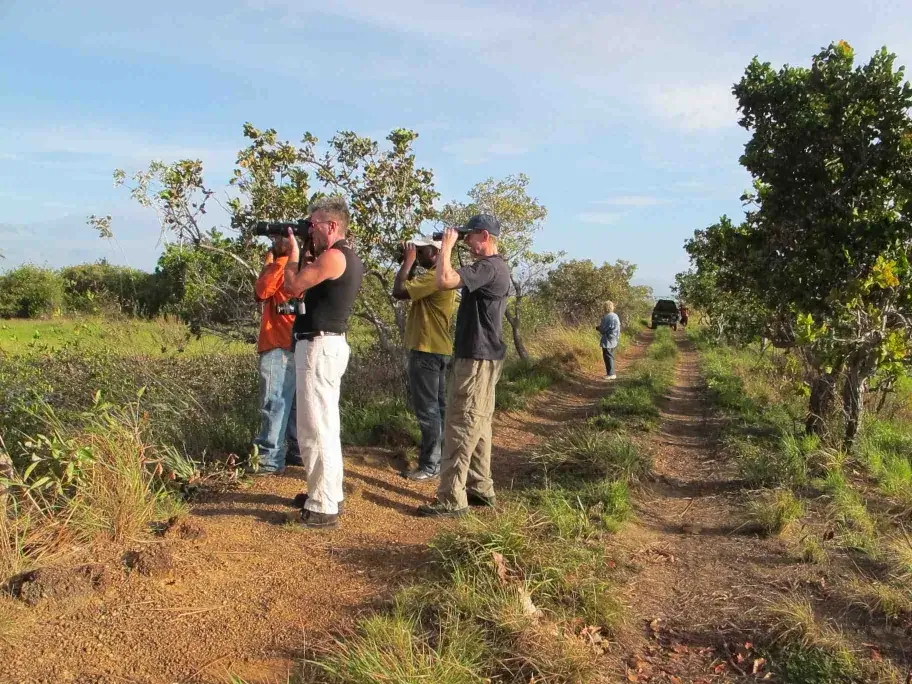
Guyana is a small country on the north coast of South America but can be regarded as one of the best birding destinations in the region. Surrounded by Suriname, Venezuela, Brazil and the Atlantic Ocean to the north, it is the only English-speaking country on the continent and home to over 900 species of birds including many of the Guiana Shield endemics.
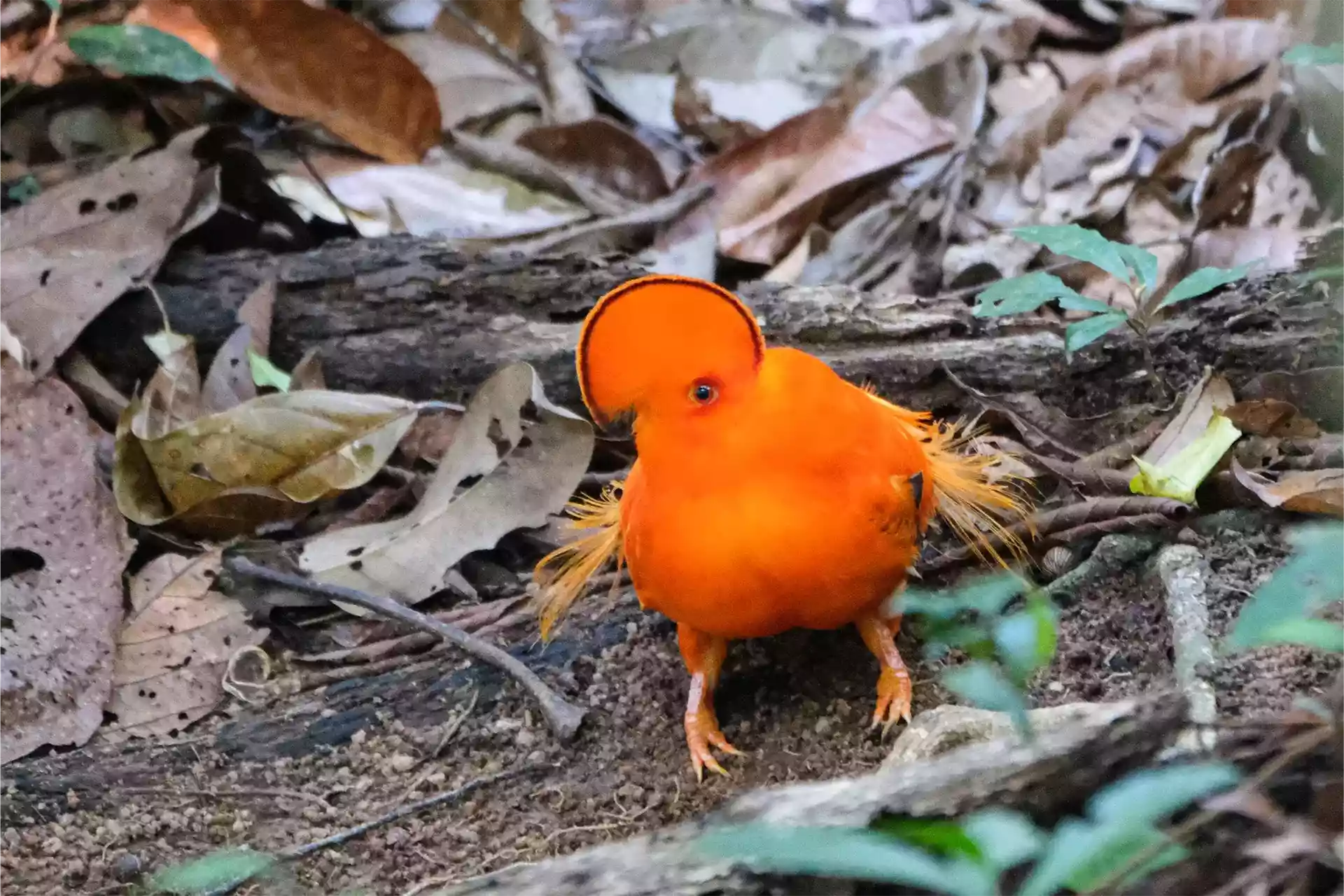
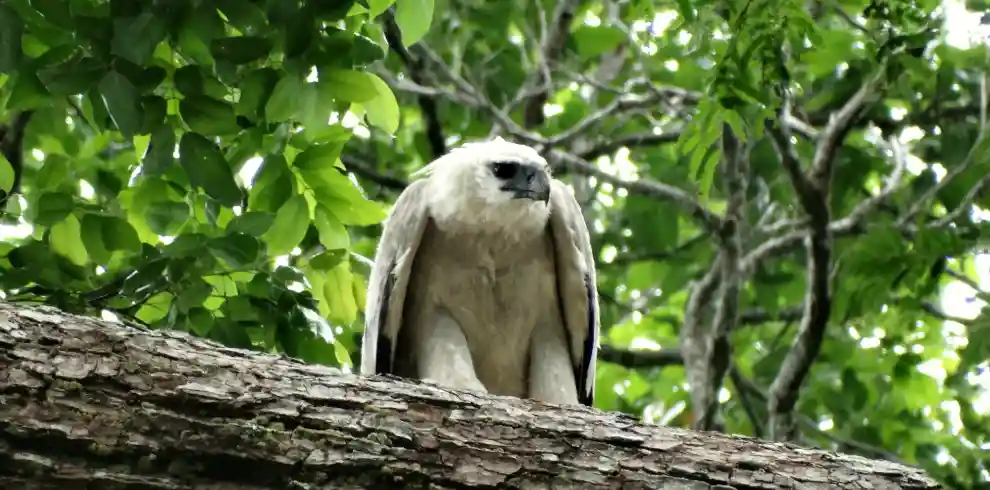
With its low coastal belt, hilly sand and clay region, vast savannahs, forested highlands and pristine rainforest and rivers, Guyana has become a hot spot for birders from around the world keen to see its easily accessible birdlife. Whether out looking for the bright and colourful Guianan Cock-of-the-rock, the prehistoric Hoatzin, the Guianas Shield endemic Blood-coloured woodpecker or the magnificent Harpy Eagle, Guyana should be your first choice.
Our expert local and indigenous guides have a wealth of knowledge of the birds of Guyana, their mating rituals, vocalization and habitats. They are eagerly waiting to take you on what is sure to be an exciting birding adventure on our Guyana Birding On A Budget Tour.
Click here for a video on Birding in Guyana.
You also might be interested to learn more about Birding in Guyana Tour
Activities & Highlights
- Bird Watching
- Sight Seeing
- Animal Spotting
- Animal Spotting
- Trail walks
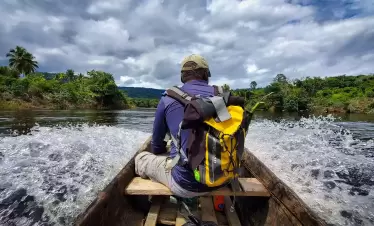
- Riverboat trips
- Remote jungle lodge
- Harpy Eagle
- Victoria Amazonica
- Guianan Cock-of-the-rock
- Iwokrama Canopy Walkway
Itinerary
Pick up and transfer from the airport to El Dorado Inn.
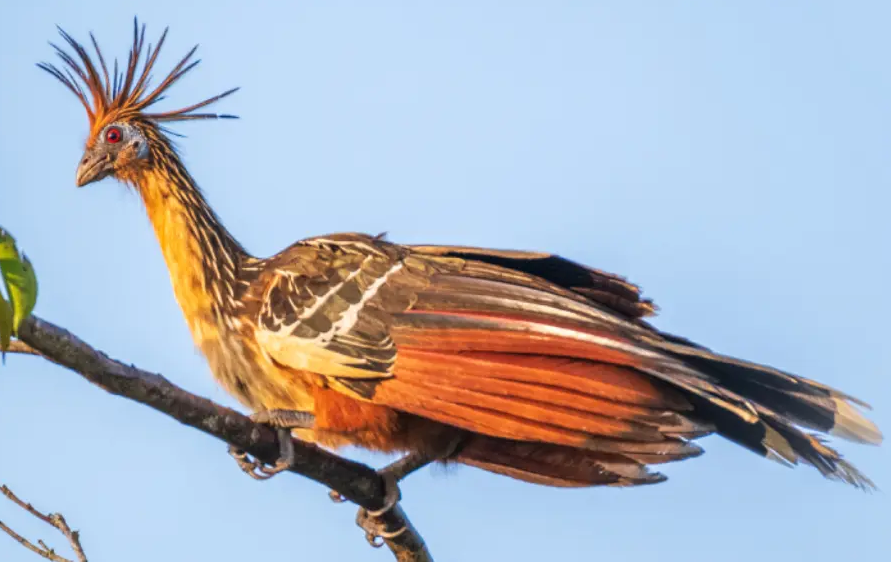
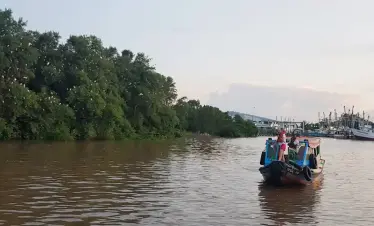
Before dawn travel eastward from Georgetown along the Atlantic coast to the Mahaica River through an area that has been mainly used for the cultivation of rice and other crops. This excellent riverfront ecosystem is inhabited by flocks of egrets, herons, ibis, various marsh tyrants, and Guyana’s national bird, the Hoatzin. Guyana’s national bird, the Hoatzin (Opisthocomus Hoatzin) is also known as the Stinkbird, or “Canje Pheasant”. This odd bird is an unusual species of tropical bird found in swamps, riverine forest and mangrove between the Amazon and the Orinoco delta in South America. The Hoatzin is herbivorous; it eats leaves and fruit, and has an unusual digestive system with an enlarged crop which functions as a rumen. It also produces a horrible smell to scare away potential predators, hence one of its local names. The river offers a rare chance to see the range-restricted Blood-colored Woodpecker which has been badly affected by habitat loss in the ‘Guianas’ coastal region. Howler monkeys also frequent these riverside trees. It is also possible to catch a glimpse of the Blood-coloured Woodpecker.
After local breakfast at the home of our boatman we will return to Georgetown, stopping to check out the mudflats beyond the seawall to look for some shore birds. There are always a few scarlet ibis looking for crabs that give them their brilliant colour. The Rufous Crab-Hawk would be a good find as the replanting of the mangroves along the coast has seen a resurgence of this beautiful endangered hawk.
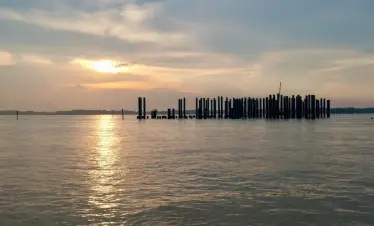
Lunch at a local restaurant before a late afternoon tour on the Demerera River on a private river taxi. The guide will point out famous buildings of the capital along the waterfront as well as shorebirds feeding on the mudflat.
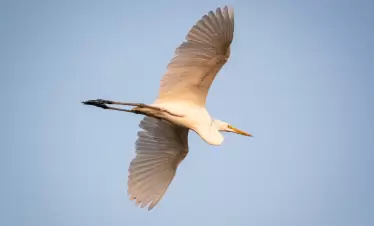
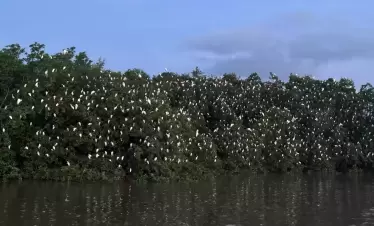
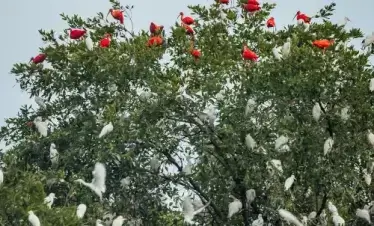
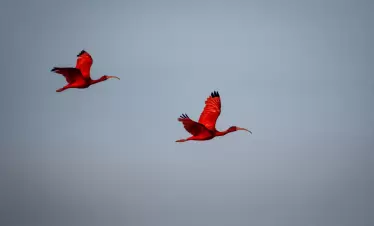
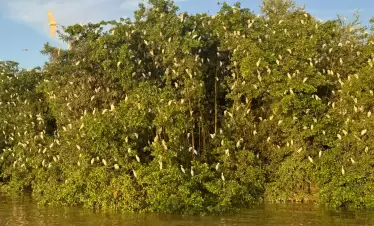
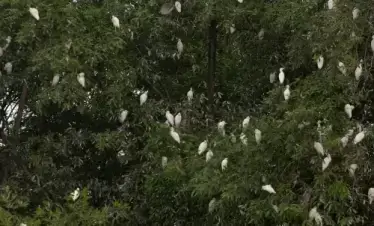
We then continue our trip to see the Demerara Harbour Bridge, once the longest floating bridge in the world at a total length of 1,851m long. We will cross under the bridge and tie up our boat near a mangrove that is the nightly roost for a variety of birds. As the sun sets over the river we will have a cold drink and some snacks (or cutters as we call them here in Guyana) as we enjoy flocks of brilliant Scarlet Ibis, three kinds of Egrets and Herons as they fly across the sky and settle into the mangroves for the evening.
Dinner at Cara Lodge.
Overnight at Eldorado Inn.
Early morning departure by bus through the rainforest into the heart of Guyana. Cross the Essequibo River and continue to Iwokrama River Lodge. More info The Iwokrama Rainforest is a vast wilderness of one million acres. This protected area was established in 1996 as the Iwokrama International Centre for Rainforest Conservation and Development. The Iwokrama Forest is in the heart of one of four last untouched tropical forests of the world – The Guiana Shield of North-Eastern South America. Iwokrama was established as a living laboratory for tropical forest management.
From research to business, Iwokrama ensures local economic and social benefits from forest use and conservation. The forest is in the homeland of the Makushi people, who have lived here and used the forest for thousands of years.
After dark we’ll set out on the river, in hope of finding one or another of its four species of caiman, and listen for night birds such as Spectacled Owl, White-winged Potoo, Rufous Potoo, Long-tailed Potoo, Zigzag Heron or Blackish Nightjar. Using our flashlights, we will look for the eyeshine of snakes including Cox boa, tree frogs and if lucky maybe some mammals.
Overnight at Iwokrama River Lodge.
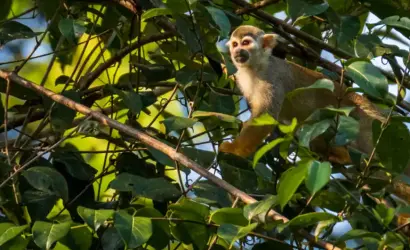
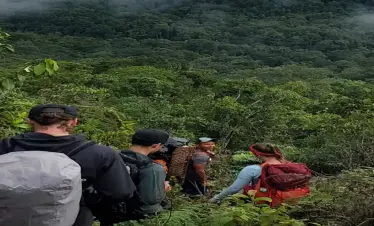
Making an early start, we’ll embark on the Essequibo River and circumnavigate nearby Indian House Island, before returning to the lodge for breakfast. Leave the lodge by boat, birdwatching along the way, for the hike to Turtle Mountain. More info A well-maintained trail winds through the forest before an exhilarating climb up the mountain to its summit at 935ft (approx. 360m). It takes 1 3/4hrs to walk up the mountain, but the effort is more than worth it for the breathtaking views over the forest canopy when you get there and chances of Green Aracari, White Bellbird or a fly-by of one of five types of eagles. There are many Antbirds and Manakins to be found here as well as the opportunity to see Black Spider and Red Howler Monkeys.
This afternoon explore the trails around the lodge with an Iwokrama Ranger.
Overnight at Iwokrama River Lodge.
Wednesday – Early morning birding at on the sandy trails of Mori Scrub, home of the Rufous-winged Ground-Cuckoo, Rufous-crowned Elaenia, Black Manakins and Red-shouldered Tanager. Continue through Iwokrama Reserve, birding for the myriad bird species that frequent the forest edge, including Crimson and Purple-necked Fruit-crow, Crimson Topaz, Green Oropendula, Spotted and Guianan Puffbird, Scarlet and Red-and-Green Macaw, Blue-cheeked and Orange-winged Parrot and Gray-winged Trumpeter. This road is the only north – south access in Guyana and links the country to Brazil. Even so traffic is only very occasional and wildlife is often seen along the road, including the occasional sightings of the elusive jaguar. This afternoon we will head to the canopy walkway where we can birdwatch easily and from this treetop vantage, you can sometimes see Red Howler and Black Spider Monkeys. The walkway has four suspension bridges leading to three platforms, the highest of which is over 30 metres above the ground, and these will allow great looks at a range of canopy species, many of which you would struggle to see well from the forest floor. Amongst the likely highlights are Painted, Brown-throated and Golden-winged Parakeets, Caica Parrot, Guianan Puffbird, Waved and Golden-collared Woodpeckers and Spot-tailed, Todd’s and Ash-winged Antwrens.
The walkway is also an excellent place to look for various species of cotinga including the poorly known and range-restricted Dusky Purpletuft and if there are any suitable fruiting trees nearby, you stand a good chance of seeing this bird, as well as the more widespread Purple-breasted Cotinga.
As darkness falls on the canopy walkway, you may see the White-winged Potoo.
Overnight at Atta Rainforest Lodge.
– Apart from the Iwokrama Canopy Walkway itself, you can enjoy wildlife and birdwatching walks on the trails around the area. Another area where we will want to spend some time is the clearing around the lodge, as this is one of the best places to see another of Guyana’s “must see” birds, the Crimson Fruitcrow. The clearing is also a reliable site for Black Curassow as there is a large and growing family party which has become habituated to people and regularly passes through the clearing. Deer, Tapir and Agouti are also regular visitors to the lodge. Hammocks and outdoor benches enhance the lovely gardens which include varieties of heliconias that attract hummingbirds, close enough for the perfect photo. There are also a few feeders.
Serious birders will want to search the undergrowth for the rarely seen Rufous-winged Ground-cuckoo. For those interested in botany many of the trails have the key tree species marked.
Overnight at Atta Rainforest Lodge.
Welcome the dawn chorus from the canopy walkway or go on a birding trail before breakfast and departure. Transfer by vehicle through the Iwokrama rainforest to Corkwood where there is a comparatively short trail to hopefully see the amazingly brilliant Guianan Cock-of-the-rock. This trail is through interesting and pristine rainforest and the guides can explain how the plants are used for medicine and other purposes. Continue the journey to the community of Surama. There are an excellent range of species at Surama including the Rufous-winged Ground-cuckoo. During our stay we will hope to encounter Red-legged Tinamou, Painted Parakeet, Dusky Parrot, Lilac-tailed Parrotlet, Guianan Puffbird and a variety of antshrikes, antbirds and antwrens.
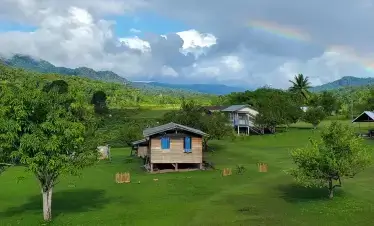
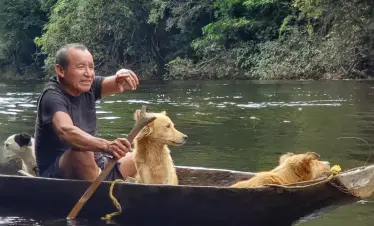
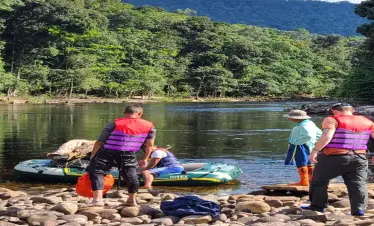
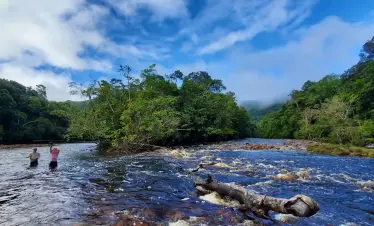
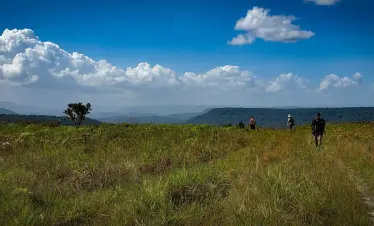
Take a three mile walk across the savannah and through the rainforest to the Burro Burro River. Your guides will then paddle you on the river for opportunities to observe Wildlife such as Giant River Otters and many bird species. Overhead there are the usual very noisy Macaws especially the Scarlet which is found here in large numbers. Return to the lodge for sunset.
Overnight at Surama Eco-lodge. Breakfast, lunch and dinner included.
Early morning birding and village tour before departure to Lethem for flight to Georgetown. Lunch at local restaurant.
Transfer to the airport for your departing flight.
US$705 for a group of 4 persons
US$682 for a group of 6-8 persons
US$80 for single supplement
Group Discount
| Minimum Person | Price (USD)/Person |
|---|---|
| 10 Persons | $3,090 |
| 8 Persons | $3,222 |
| 6 Persons | $3,401 |
| 4 Persons | $3,585 |
Inclusion
Included
- Airport transfers
- Double or twin accommodation
- Meals as listed
- All road & river transfers
- Internal flights
- Activities as described
- Local guides
- Value Added Tax
- Kaieteur National Park Fee
- Iwokrama Forest User fee
- Iwokrama Canopy Walkway Fee
Not Included
- Alcoholic drinks
- International flights
- Visas
- Items of personal nature
Terms & Conditions
Essential Information
Click here to download essential information about this tour





















Write a Review