| Number of Pax: |
1 |
2 – 12 |
| Rate p/p US$: |
100.00 |
95.00 |
Pickup at your hotel and transfer to a local restaurant.
“Aagman” is derived from India’s ancient Sanskrit script, which means ‘arrival’ or ‘beginning’. The Aagman food philosophy is driven by a desire to present an eclectic and expansive Indian repertoire, bursting with flavours and originality, as a multi-sensory dining experience. Experience the epicurean Mughlai Cuisine from the imperial kitchens of India. Enjoy the authentic flavours of creations achieved through the use of the finest ingredients and cooking techniques, in elegant surroundings.
Overnight at Cara Lodge. B
Monday
Pickup and transfer to Eugene F. Correia International Airport.
Board flight for journey over hundreds of miles of tropical rainforest to land at Fair View Airstrip. (Check in time 0730hrs, Departure 0900hrs, time subject to change by airline)
Pick up from Fair View airstrip and transfer to Iwokrama River Lodge.
The Iwokrama Rainforest is a vast wilderness of one million acres. This protected area was established in 1996 as the Iwokrama International Centre for Rainforest Conservation and Development. The Iwokrama Forest is in the heart of one of four last untouched tropical forests of the world – The Guiana Shield of North-Eastern South America. Iwokrama was established as a living laboratory for tropical forest management.
From research to business, Iwokrama ensures local economic and social benefits from forest use and conservation. The forest is in the homeland of the Makushi people, who have lived here and used the forest for thousands of years.
The Iwokrama River Lodge is set overlooking the Essequibo River. Accommodation is offered in eight spacious timber cabins with en suite and verandas overlooking the river. Electricity is provided by a combination of solar and diesel generator systems, and wireless internet access is provided for free in the main building. Meals are served buffet-style in the Fred Allicock dining hall.
Explore the trails around the lodge with an Iwokrama Ranger. Iwokrama is home to many bird species including Capuchin bird, Black Nunbird, Chestnut-rumped Woodcreeper, Amazonian Antshrike, Brown-bellied Antwren, Spot-tailed Antwren, Todd’s Antwren, Spotted Puffbird, Green Aracari, Guianan Toucanet, Guianan Red Cotinga, Pompadour Cotinga, Rufous-crowned Elaenia, Bronzy Jacamar, Chestnut & Waved Woodpecker, Gray Antbird, and Strong-billed Woodcreeper. Three other Neotropical species in the Iwokrama forest of high interest are White-winged Potoo, Rufous Potoo, and Rufous-winged Ground-cuckoo.
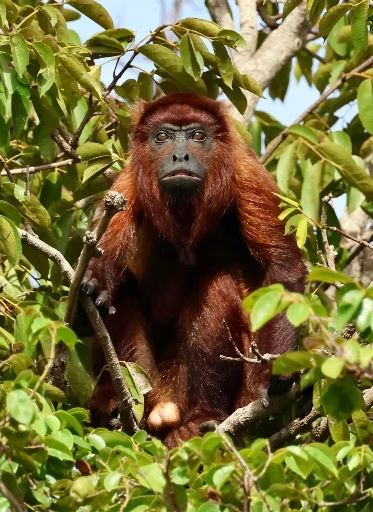
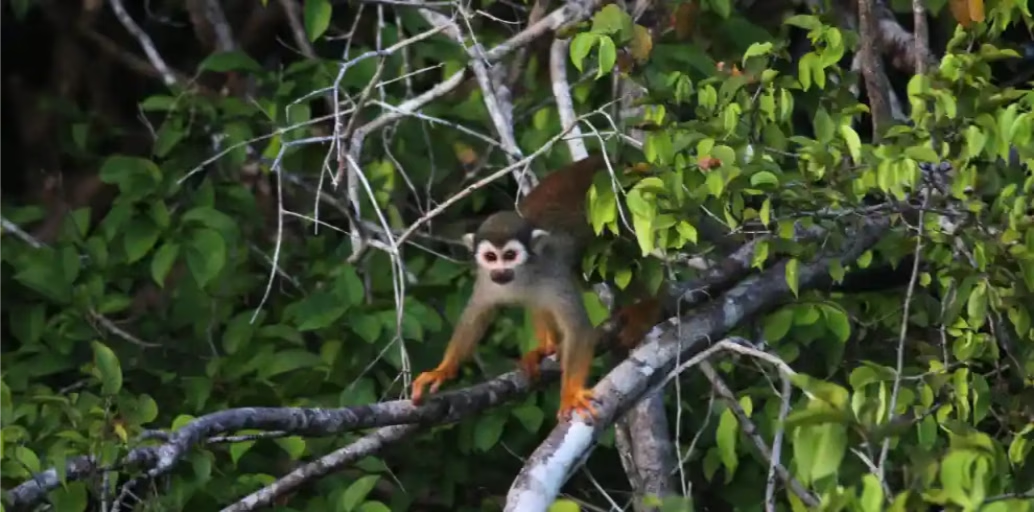
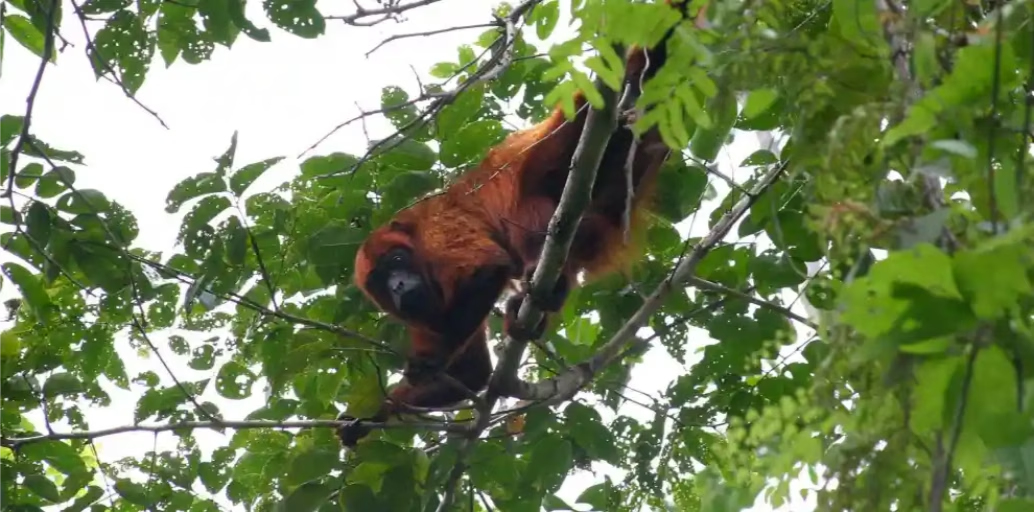
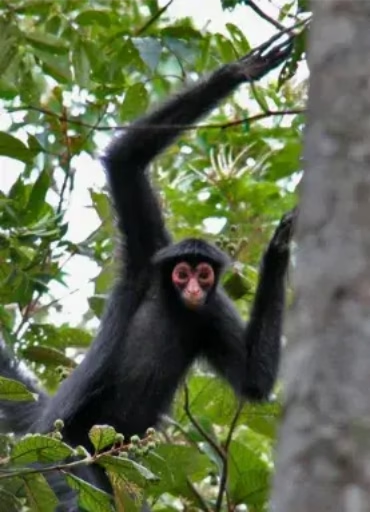
The forest is also home to many mammals and you may see Red-rumped Agouti and various species of monkey including Red Howler, Black Spider and Wedge-capped.
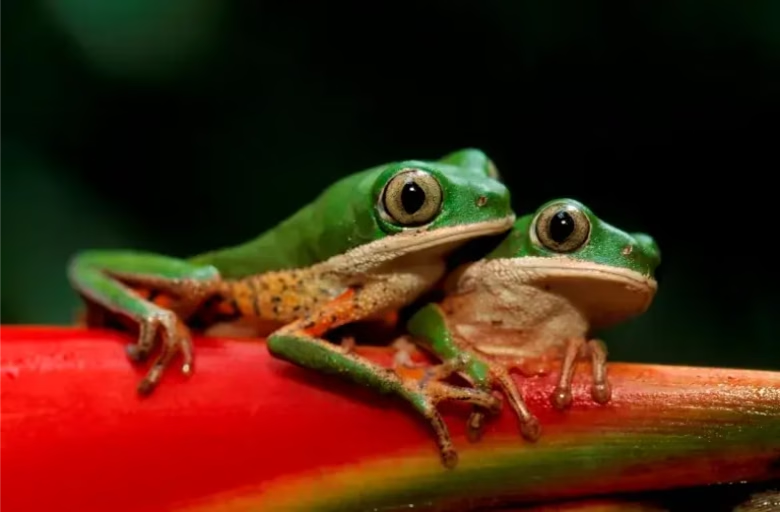
After dark we’ll set out on the river, in hope of finding one or another of its four species of caiman, and listen for night birds such as Spectacled Owl, White-winged Potoo, Rufous Potoo, Long-tailed Potoo, Zigzag Heron or Blackish Nightjar. Using our flashlights we will look for the eyeshine of snakes including Cox boa, tree frogs and if lucky maybe some mammals. Overnight at Iwokrama River Lodge. BLD
Tuesday
Making an early start, we’ll embark on the Essequibo and circumnavigate nearby Indian House Island, before returning to the River Lodge for breakfast.
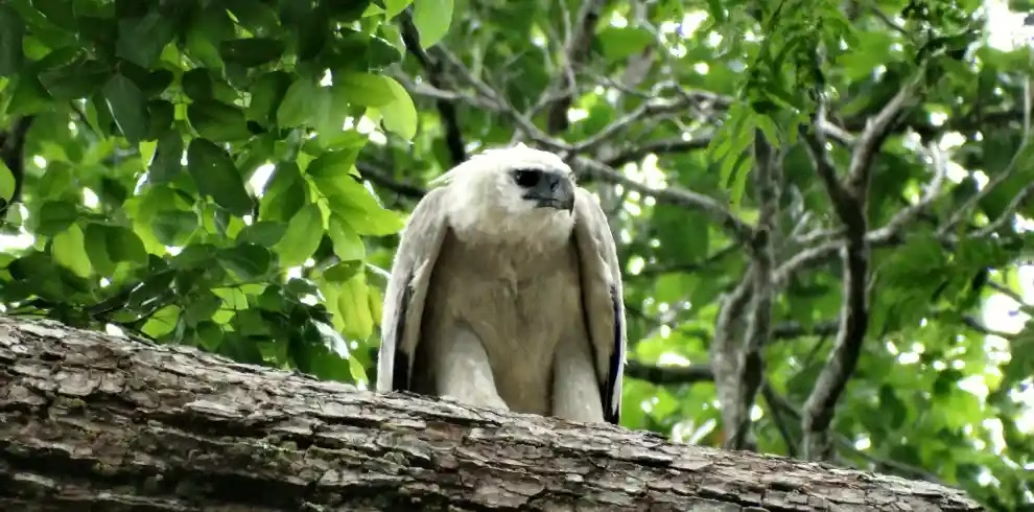
Leave the lodge by boat, birdwatching along the way, for the hike to Turtle Mountain. A well-maintained trail winds through the forest before an exhilarating climb up the mountain to its summit at 935ft (approx. 360m). It takes 1 3/4hrs to walk up the mountain, but the effort is more than worth it for the breathtaking views over the forest canopy when you get there and chances of Green Aracari, White Bellbird or a fly-by of one of five types of eagles. This trail is also a great location for seeing Black Spider and Red Howler monkeys. If you think this hike may be too strenuous you can take an alternative boat trip to Stanley Lake to search for Giant River Otters and Black Caiman.
As the afternoon cools you set out on a boat trip to visit Kurupukari Falls to see the Amerindian petroglyphs (dependent on the water level). Overnight at Iwokrama River Lodge. BLD
Wednesday
Explore the trails around the lodge with an Iwokrama Ranger.
Transfer by 4 x 4 along the trail that is one of the best places to see the elusive Jaguar. No promises, but many have been lucky! Along the road, we will watch for the myriad of bird species that frequent the forest edge. This road is the only north – south access in Guyana and links the country to Brazil. Even so traffic is only very occasional and wildlife is often seen along the road, such as Agouti, Tayra, Tapir and Black Curassow. The journey concludes at the Atta Rainforest Lodge, home of the Iwokrama Canopy Walkway.
The Iwokrama Canopy Walkway is situated near the southern boundary of the Iwokrama Reserve in central Guyana. The walkway has four suspension bridges leading to three platforms, the highest of which is over 30 metres above the ground. (Important note: currently, 2 bridges & 1 platform are down for maintenance)
Another area where we will want to spend some time is the clearing around the lodge, as this is one of the best places to see another of Guyana’s “must see” birds, the Crimson Fruitcrow. The clearing is also a reliable site for Black Curassow as there is a large and growing family party which has become habituated to people and regularly passes through the clearing.
Atta Rainforest Lodge is 500 metres from the base of the Iwokrama Canopy Walkway, offering comfortable private-room accommodation with ensuite bathrooms, delicious home-cooked meals, and traditional Amerindian hospitality. The communal building houses the bar, dining area and kitchen and is open sided with views across the gardens to the towering forest, which completely surrounds the lodge. Hammocks and outdoor benches enhance the lovely gardens which include varieties of heliconias that attract over ten different hummingbirds, close enough for the perfect photo. Overnight at Atta Rainforest Lodge. BLD
Thursday
Before dawn we will return to the canopy where we can birdwatch easily and may see Rufous-throated Sapphire, Green Aracari, Pygmy Antwren and Guianan Streaked-Antwren. With some luck Guianan Toucanet, Pompadour Cotinga, Buff-cheeked Greenlet and a host of crown specialists may come within our view. From this tree top vantage, you can sometimes see Red Howler and Black Spider Monkeys.
Apart from the Iwokrama Canopy Walkway itself you can enjoy wildlife and birdwatching walks on the trails around the area. Many bird species, stunning insects, noisy amphibians, and playful primates make the surrounding forest their home. Deer, Tapir and agouti are also regular visitors to the lodge. Serious birders will want to search the undergrowth for the rarely seen Rufous-winged Ground-cuckoo.
As darkness falls on the canopy walkway, you may see the White-winged Potoo. Night walks are also possible and something interesting or new always seems to pop on to the scene including one of the six different cats to be found along the transnational road near the lodge. Overnight at Atta Rainforest Lodge. BLD
Friday
Welcome the dawn chorus from the canopy walkway and then return to the lodge for breakfast before departure.
Transfer from Atta Rainforest Lodge through the rainforest to Corkwood in the Iwokrama Forest. Here there is a comparatively short trail to hopefully see the amazingly brilliant Guianan Cock-of-the-rock. This trail is through interesting and pristine rainforest and the guides can explain how the plants are used for medicine and other purposes. Continue to the community of Surama.
The Indigenous community of Surama is located in the heart of Guyana. The village is set in five square miles of savannah which is ringed by the forest-covered Pakaraima Mountains. The villagers of Surama are mainly from the Macushi tribe and still observe many of the traditional practises of their ancestors. The Surama Eco Lodge is owned and operated by the entire community. The Village Council serves as the Board of Directors and through consultation, they decide how the profits from the tourism business are to be spent to benefit the entire community.
On arrival in Surama, you will receive a warm welcome and settle into your accommodation at the lodge. A guide will escort you for a short walk on trails to observe the forest and bird life.
As the afternoon cools take for a three-mile walk across the savannah and through the rainforest to the Burro Burro River. This is the best time to observe bird and wildlife along the trail. Your guides will then paddle you on the Burro Burro River for opportunities to observe Giant River Otters, Tapir, Tira, Spider Monkeys and many more species.
Tonight, enjoy an educational walk to observe wildlife and experience the mystique of the forest after dark. Make sure to bring your flashlights to look for the eyeshine of the creatures of the night. Overnight at Surama Eco-lodge. BLD
Saturday
Rise before dawn for a walk across the savannah and then climb up Surama Mountain for incredible views across the village and savannah to the Pakaraima Mountains. This is not a technical climb but can be arduous, especially after rain, and not for everyone. Your guides will happily offer alternative activities if you prefer not to do this climb.
Sunday
At dawn take a hike in the foothills of the Pakaraima Mountains on the Panorama Trail where you might see Cinereous Mourner, Finsch’s Euphonia, Reddish Hermit, Rufous-bellied Antwren, Green-tailed and Yellow-billed Jacamar. The views across the savannah and villages as the sun rises are spectacular.
Return to the lodge for breakfast before departure.
Transfer by vehicle from Rock View Lodge to Ginep Landing.
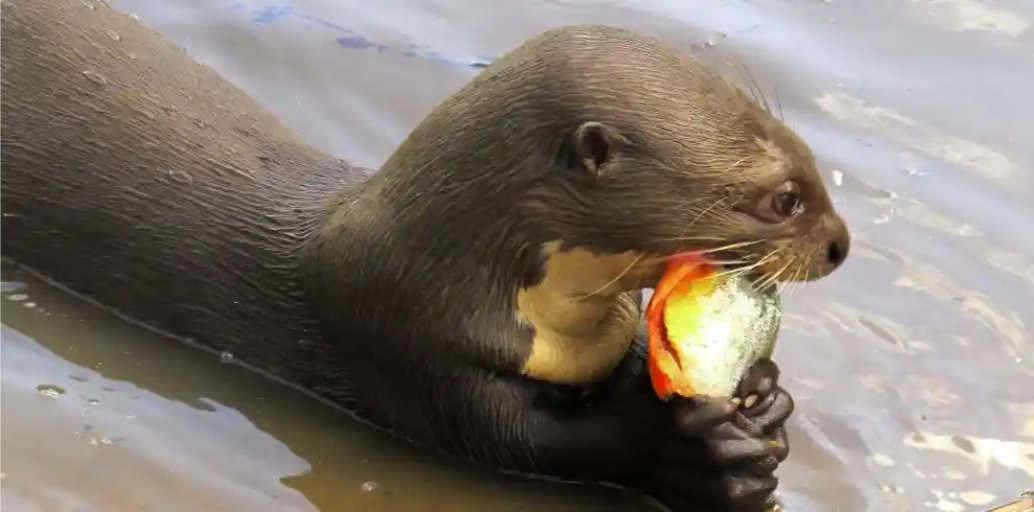
From Ginep Landing we take a boat trip on the Rupununi River to Karanambu Lodge. Depending on the river level, this trip offers an excellent opportunity to look for Giant Otters as there are several family groups which live along this stretch of the Rupununi River.
Karanambu, a 110-square mile former cattle ranch located in the North Rupununi, was the home of the late Diane McTurk, conservationist and a world-renowned expert on giant otters. Known for its expansive wetlands and savannah, as well as its biological and cultural diversity, Karanambu encompasses savannah, marshy ponds, riparian forest, and a 30-mile stretch of the Rupununi River. The number of species found here is much higher than expected given its size with at least 600 species of bird, and over 200 species of mammals. The seasonally flooded savannahs and forests also draw substantial fish migrations with as many as 700 species of fish — more than anywhere on Earth.
This region is rich in history and is the homeland of the Makushi and earlier peoples dating back more than 7,000 years. Several prominent explorers and naturalists have written about their experiences here, including Robert and Richard Schomburgk, Charles Waterton, Evelyn Waugh, and Gerald Durrell. A very young David Attenborough spent time here and wrote about it in his early book, “Zoo Quest to Guiana”.
With both the river and savannahs close at hand there is a wide variety of activities to be enjoyed at Karanambu. Two guided excursions are provided each day — one early in the morning and another late in the afternoon and into the evening. As well as being the coolest times to be out, these are usually the best times to see the different birds and animals. Trips may be on the river by boat, on the savannahs by 4 by 4 or along forest trails on foot to the different ponds in the area.
Late in the afternoon we will travel by boat to look for wild Giant River Otters and as dusk falls to the ponds to see the giant Victoria amazonica waterlily, bloom at dusk. On the return trip we will spotlight for Black Caiman, birds and creatures of the night.
Accommodations are in traditionally made clay brick cabins, each with en suite and veranda with hammocks. Overnight at Karanambu Lodge. BLD
Transfer from Surama to Rock View Lodge at Annai.
Rock View Lodge is located where the savannah meets the forest-covered foothills of the Pakaraima Mountains. With its tropical gardens and flowering trees, the lodge resembles an oasis in the savannah, and attracts many species of birds, particularly nectar feeders and frugivores. Nearby patches of light forest are home to certain ant birds and flycatchers, and of course the grasslands support an avifauna of their own.
If they are in season, you can see how cashews are roasted and see how local handicrafts are made and maybe even try your hand at them yourself. The labour-intensive method of cracking open the roasted nuts along with the self-ignition of the nuts as the acid content burns off are a spectacular sight. You can then taste the freshly roasted nuts.
Eight comfortable rooms have ensuites and feature a patio and hammock for relaxing. Meals are served in the dining room under the mango trees and most of the produce is grown on the property. The pool has a lovely setting in the gardens and is a welcome respite on a hot day. Overnight at Rock View Lodge. BLD
Monday
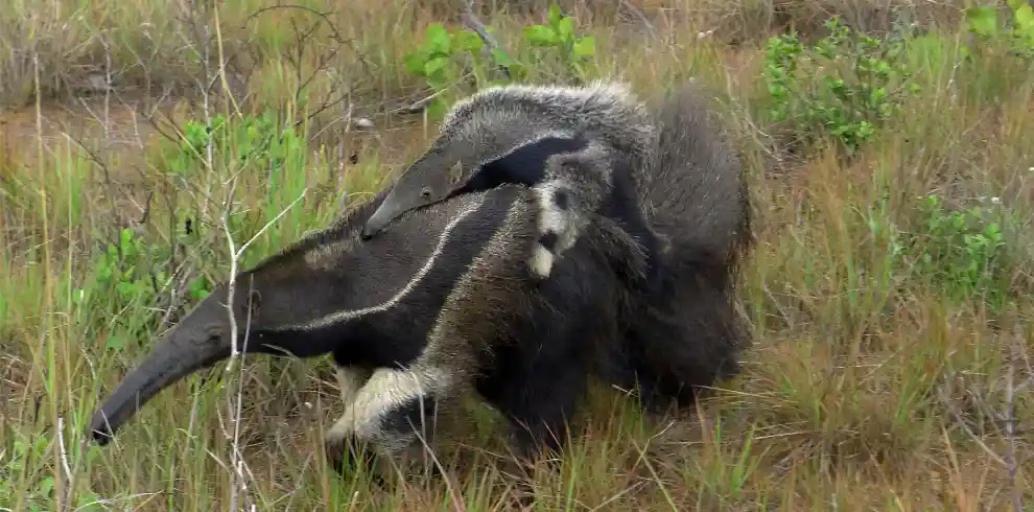
This morning we make an early start to an area of rolling grasslands, home to a population of giant anteaters. With luck we shall locate one of these six-foot long animals excavating its breakfast from one of the termite mounds that stud the savannah. Though giant anteaters live in overlapping home ranges they are mostly solitary except during mother-offspring relationships, aggressive interactions between males, and when mating. Mother anteaters carry their offspring on their backs until weaning them.
Evening river excursion or if you are interested in bird watching you can explore woodland patches or gallery forest along the river where we’ll hope to find a variety of species. A feature bird for the area is the Agami Heron. An evening walk along the airstrip offers seven species of nightjar and among the grasslands the Double-striped Thick-knees. Overnight at Karanambu Lodge. BLD
Tuesday
In the event you did not see a giant anteater the previous morning, there is time to travel out to search the savannah again. Or explore the Rupununi River in search of wild Giant River Otters, Black Caiman and Arapaima, making a boat journey along quiet stretches of river.
Return to the lodge for breakfast before departure.
After breakfast we say our goodbyes and transfer upriver by motorized boat to the nearby Amerindian village of Yupukari and Caiman House.
At the edge of Yupukari Village in the Central Rupununi is Caiman House Field Station, a combination guest-lodge and education centre focused on research and conservation projects along the nearby Rupununi River. The Field Station is the hub of several participatory development projects, including the introduction of classroom libraries in all three village schools and an Internet-enabled public library. Visitors may have the opportunity to meet local craftspeople, including the furniture builders at Yupukari Crafters, The Wabbini craft house, and the ladies that grow and process cotton and make lampshades.
Caiman house is also very involved in a turtle conservation program. Recently in the rainy season the sand banks get covered in water as the rains have been coming earlier. Rangers go out and dig up the eggs that the turtles have laid on the sandbanks before they are covered in water and spoiled. They are taken back to the field station and reburied. When they hatch they are kept in two ponds and after a few months there is the turtle celebration and the children in the wildlife club all join in to release the turtles back into the river. By holding them for up to a year the shells harden and the survival rate is very much higher resulting in a larger population of turtles. The yellow spotted river turtles are the main beneficiaries of this program but it is the rare giant river turtle which stands to gain the most. Special attention is paid to rescuing these endangered giants. You can visit the holding ponds where the babies are kept.
Four modest but comfortable guest rooms are situated around a central lounge area in the lodge behind the research centre. Guest rooms feature comfortable beds and ensuite bathrooms with flush toilets and running water. Other rooms are available in the annex building, two with ensuite and one with a shared bathroom. Caiman House Field Station and the Guest House are powered 24 hours a day by a large solar array. The entire station is served by wireless internet access.
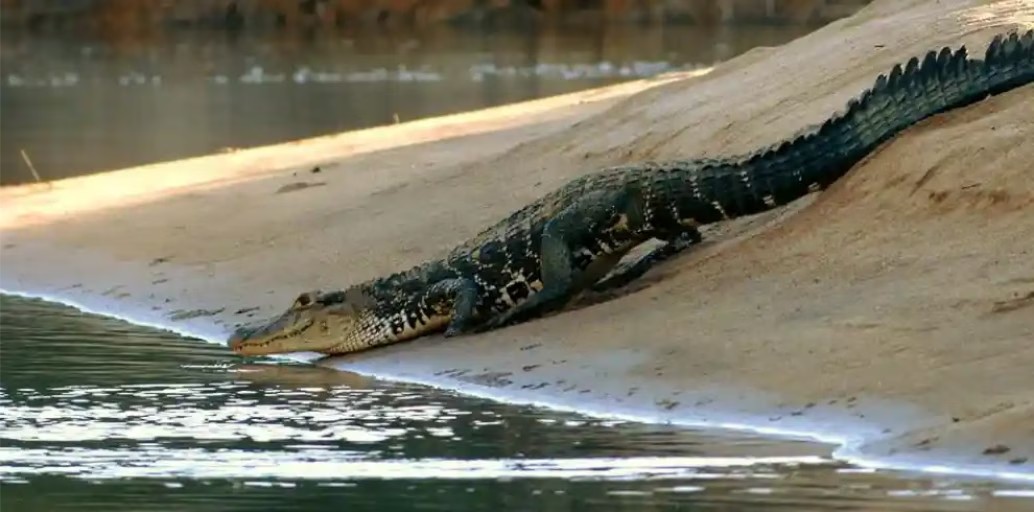
As a guest you have the unique opportunity to support and participate in an ongoing field study of the Black Caiman (Melanosuchus niger), the largest member of the alligator family and an endangered species. You are invited to accompany the indigenous crew as they search for and capture Black Caiman on the river. Guests will observe the capture from a separate boat, but will be offered the opportunity to assist in data collection. Caiman are weighed, measured, sexed and tagged before being released back into the river. The research has already discovered interesting information on caimans’ nests that was previously unknown. Overnight at Caiman House. BLD
Wednesday
Vehicle transfer from Caiman House to Lethem.
Scheduled flight to Eugene F. Correia International Airport.
Pickup and transfer from Eugene F. Correia International Airport to Georgetown.
This afternoon enjoy a tour of the city of Georgetown with an experienced guide who will give you the history, rumour and facts on Georgetown and its citizens. We will begin our tour at the Georgetown Seawalls before continuing into the heart of the city.
During your visit to Georgetown, there are a number of interesting sites that should not be missed such as the National Museum, which contains a broad selection of our animal life portrayed in taxidermy in beautiful old glass cases, and the Walter Roth Museum of Anthropology, which houses a wonderful collection of artefacts and explains history and lifestyle of our indigenous peoples.
On this mix of vehicle and walking tour, enjoy the views of other historic buildings along this promenade such as the Public Library, City Hall, the Victoria Law Courts, St. Andrews Kirk, Stabroek Market – once described as a “bizarre bazaar, and St. George’s Cathedral, which is one of the world’s tallest free-standing wooden buildings.
We will visit the Botanical Gardens, home to an extensive collection of tropical flora,and we will also pay a visit to a pond either in the gardens or the National Park, to feed the endangered West Indian Manatees.
For those who enjoyed a city tour as part of their Pre-Tour, you can exchange this tour for a birdwatching excursion in Georgetown’s Botanical Gardens.
Pickup at your hotel and transfer to a local restaurant.
Backyard Café is located in the West Ruimveldt area where our host, guide and culinary master, Chef Delven Adams will greet you as you enter.
This, as the name suggests, is a backyard that Chef Delven has turned into an exclusive little hidden gem of a restaurant. Try not to bang your head on the passion fruit hanging overhead from the arbor. If there are ripe ones you will be welcomed to try a freshly picked one. His menu is whatever is in season at the time. It is a Guyanese fusion from all over the world.
Overnight at Cara Lodge. BLD (Check in time 1400hrs, Check out time 1200hrs midday)
Thursday
Free day to relax, explore Georgetown or enjoy an optional tour.
Optional Service (not included in package rate):
Mahaica River & Hoatzin Tour
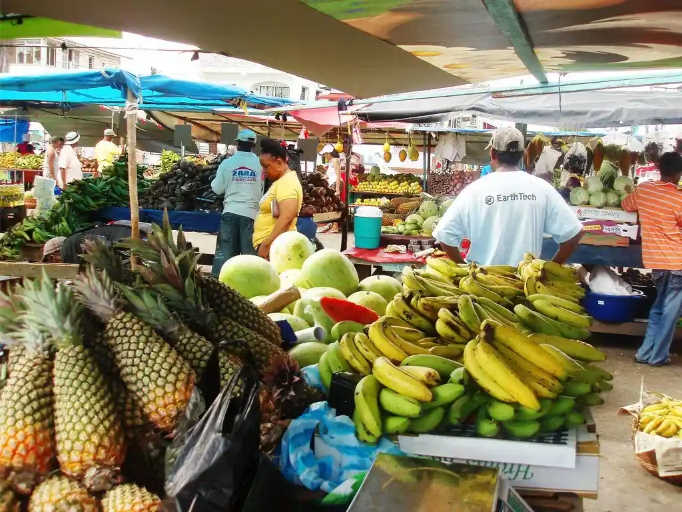
Delven makes his purchase based on clients’ suggestions and dietary requirements from the local market.
If you are interested, Chef Delven will welcome you to join him as he prepares a wonderful meal from the fruits, vegetables and meats he bought. He has a smoker and small fireside right outside and sometimes will prepare the fresh fish right there and you can certainly help him and learn his secrets. His garlic fish is out of this world! You can sit under the arbor and sip unique blends of juice or enjoy a cold Banks Beer, while taking in the sounds and smells of a delicious meal in the making in a secluded back yard in Georgetown.
Once he is ready, we will start eating our way through the courses. We will start with an appetizer, to an entrée and end up with a dessert, which we may be hard pressed to fit in, but we will give it our best shot and remember to pace yourself as you will want to try it all.