Guyana has a way of making birding feel like much more than searching for a list of species. Forest, rivers and savannah stretch across large areas of the country, and many of the places birders visit still require a real journey to reach.
That is particularly true of Mapari Wilderness Camp.
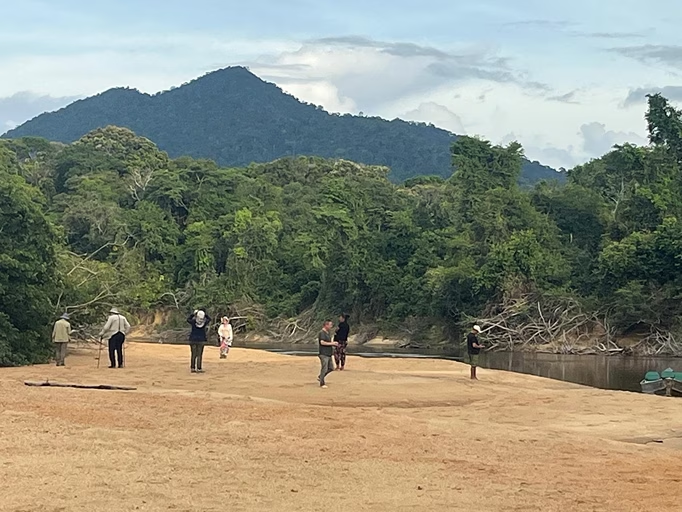
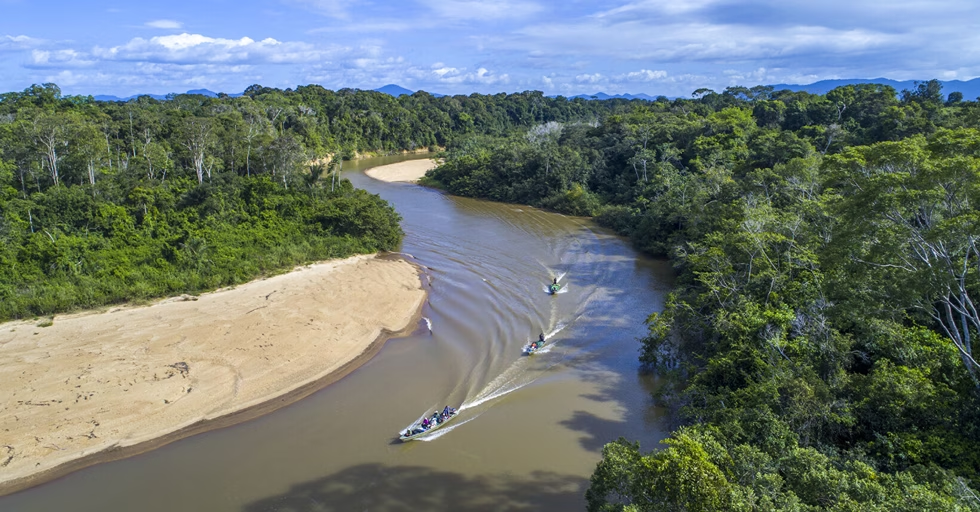
Mapari sits beside the Mapari River at the foot of Guyana’s Kanuku Mountains and is reached by boat. It is a simple wilderness camp surrounded by rainforest, where forest trails, river exploration, wildlife watching and nights in the jungle are all part of the experience.
This is not a conventional birding lodge where the wilderness begins after breakfast. At Mapari, you are already in it.
For birders, one species gives the place particular importance: the Harpy Eagle.
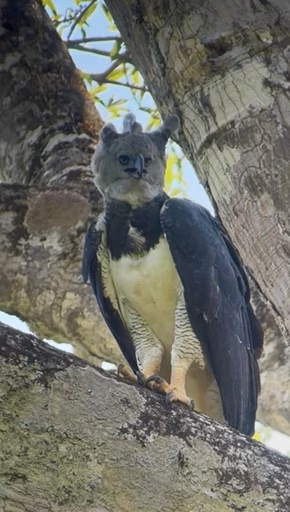
A known Harpy Eagle nesting area is associated with Mapari, with a nest high in a large Silk-cotton tree close to the river. When the nesting site is active, visitors may have the opportunity to look for one of South America’s most impressive forest raptors in its natural habitat.
There are no guarantees — nor should there be with a wild bird — but for the right traveller, the opportunity to search for Harpy Eagles deep in the Guyanese rainforest is reason enough to pay attention to Mapari.
Why Guyana Is Such a Good Destination for Birding
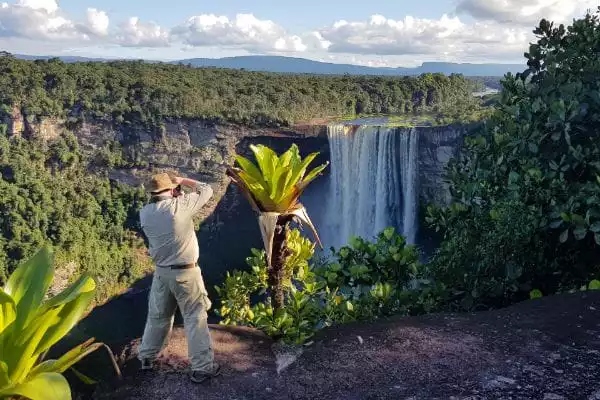
Guyana brings together rainforest, rivers, wetlands, coastal habitats and open savannah, allowing birders to experience very different environments within the same journey.
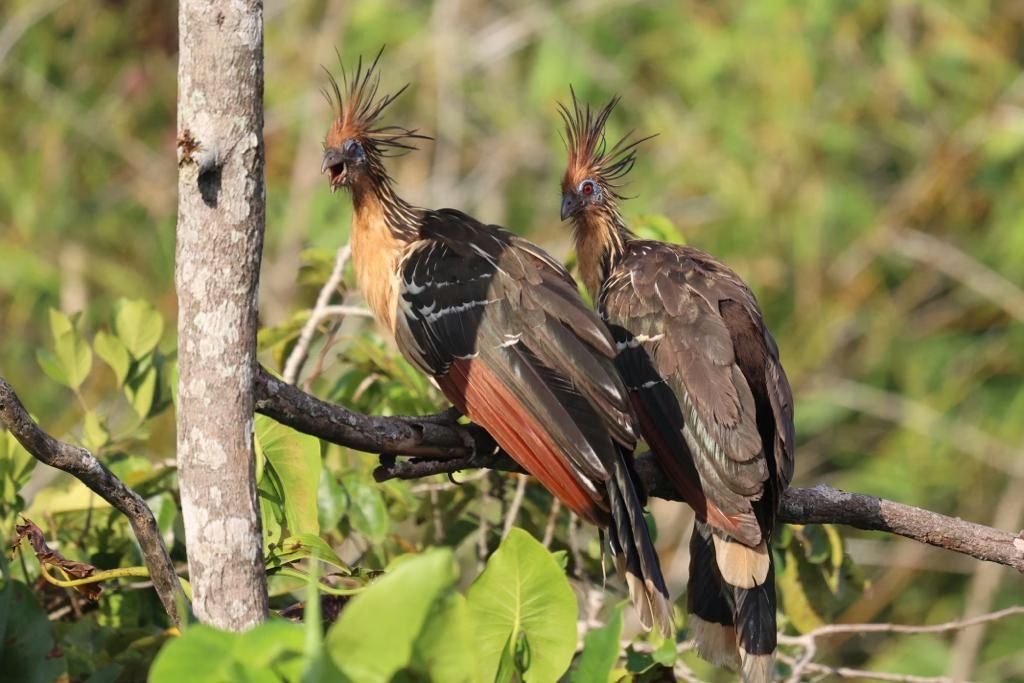
It is also part of the Guiana Shield, making the country particularly interesting for birders searching for regional specialities. Wilderness Explorers’ wider birding itineraries look for birds including Harpy Eagle, Guianan Cock-of-the-rock, White Bellbird, Hoatzin, Crimson Fruitcrow, Blood-coloured Woodpecker and White-winged Potoo.
For somebody starting to plan a trip, Wilderness Explorers’ Guyana birding tours bring together different habitats, locations and styles of birding around the country.
Mapari, however, offers something a little different.
Why Guyana Is Such a Good Destination for Birding
Guyana brings together rainforest, rivers, wetlands, coastal habitats and open savannah, allowing birders to experience very different environments within the same journey.
It is also part of the Guiana Shield, making the country particularly interesting for birders searching for regional specialities. Wilderness Explorers’ wider birding itineraries look for birds including Harpy Eagle, Guianan Cock-of-the-rock, White Bellbird, Hoatzin, Crimson Fruitcrow, Blood-coloured Woodpecker and White-winged Potoo.
For somebody starting to plan a trip, Wilderness Explorers’ Guyana birding tours bring together different habitats, locations and styles of birding around the country. Mapari, however, offers something a little different.
Mapari Wilderness Camp: Birding in the Kanuku Mountains
The journey into Mapari is part of what makes it interesting.
The camp is set beside the clear-water Mapari River in a remote area at the foot of the Kanuku Mountains. Access is by boat, immediately separating the experience from easier roadside or conventional lodge-based birding.
Once there, things are deliberately simple.
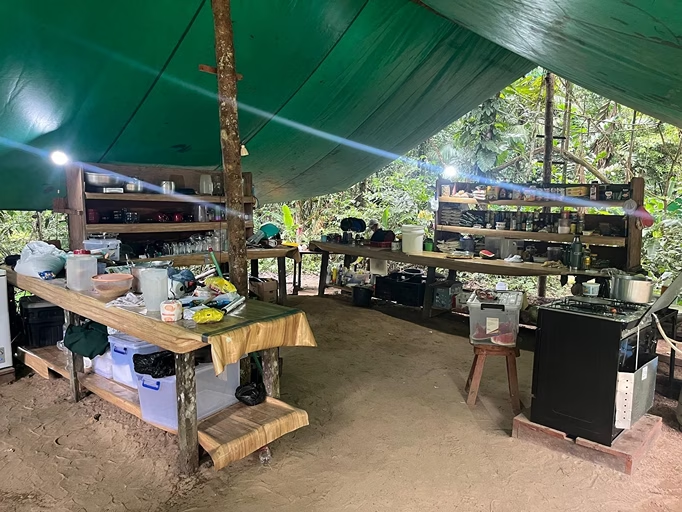
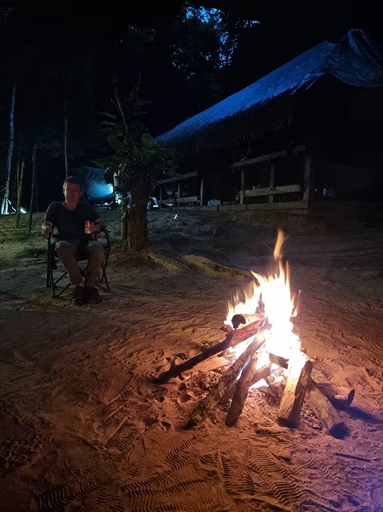
Mapari is a hammock camp with basic wilderness facilities, river bathing, forest trails and outdoor living. Nocturnal walks and night river drifting can also take visitors into another side of the forest after dark.
For somebody expecting hotel-style accommodation, this may sound basic. For birders, photographers, naturalists and adventurous wildlife travellers, that simplicity can be exactly the attraction.
There is little separation between the camp and the environment you have travelled to experience. Birding at Mapari is therefore better thought of as wilderness birding rather than luxury lodge birding.
The Harpy Eagle: Mapari’s Standout Birding Opportunity
There are birds that become targets because they are colourful, range-restricted or difficult to find. The Harpy Eagle carries another level of fascination altogether.
Its size, power and association with mature tropical forest have made it one of the great birds people hope to encounter when birding in the Neotropics.
That is why the nesting area associated with Mapari matters.
The known nest is located high in a large Silk-cotton tree, with viewing opportunities in the surrounding area when the nesting site is active.
The words “when active” are important.
A Harpy Eagle is a wild animal. Nesting activity changes and individual birds move according to their own behaviour. Travelling into suitable habitat creates an opportunity to encounter them; it does not create a guaranteed sighting.
For most serious birders, that is understood. Part of the appeal is knowing that if the encounter happens, it is happening on the bird’s terms.
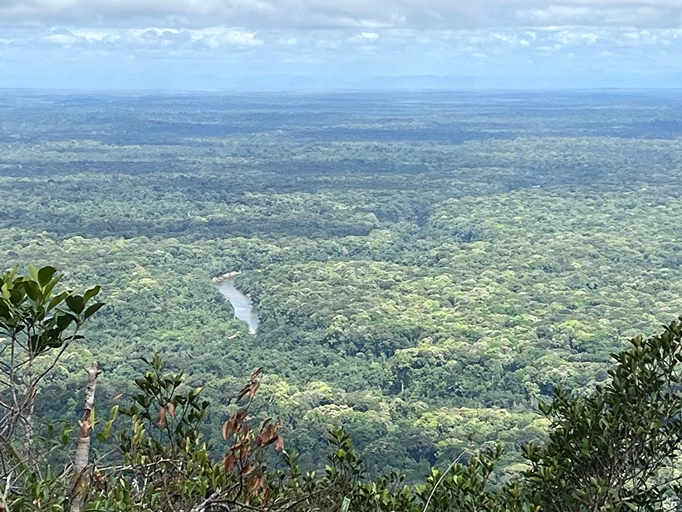
The experience is therefore not simply about arriving at a tree, photographing an eagle and moving on. It is about spending time in the kind of mature rainforest habitat that can support one of the world’s most impressive forest raptors.
More Than One Target Bird
The Harpy Eagle may be what first brings a birder’s attention to Mapari, but travelling this far into Guyana should not become a one-bird mission.
The surrounding forest and river are part of the experience throughout the day. Time on trails, quiet periods beside the river and movement through different parts of the forest give birders the chance to pay attention to whatever the habitat produces.
That is one of the differences between a remote wilderness camp and a quick birding stop.
Even when the main target refuses to appear, you are still spending time inside the ecosystem that supports it.
For travellers who want to build a much larger Guyana bird list, Mapari can form part of a wider birding journey through areas such as Iwokrama, Atta, Surama, the Rupununi and Guyana’s coastal habitats.
Birding by Forest, River and After Dark
There is no single birding routine at Mapari. The environment gives visitors several different ways to experience the forest.
Forest Trails
Moving through the rainforest on foot gives birders time to slow down, listen and work with guides who know the area.
Dense tropical forest does not always give up its birds easily. Often a call, a movement high in the canopy or a brief glimpse between branches is the beginning of the search rather than the end of it.
On the River
The Mapari River gives the experience another dimension.
Quiet river travel allows visitors to watch the banks and surrounding forest while moving slowly through the landscape. For many people, this is one of the most memorable parts of staying at Mapari, particularly during the softer light of morning or late afternoon.
Early Morning Birding
As with many tropical birding destinations, the hours around dawn can be particularly rewarding.
Calls begin to carry through the forest before the heat of the day builds, and simply waking inside that environment gives Mapari a very different feeling from driving out to a birding site from a town or hotel.
After Dark
The experience does not finish at sunset.
Nocturnal forest walks and night river drifting can reveal another side of Mapari, with roosting birds and other nocturnal wildlife becoming part of the experience.
Even for travellers whose main interest is birds, spending time in the rainforest after dark adds another layer to understanding the environment around the camp.
What Makes Mapari Different From a Conventional Birding Lodge?
It is worth being clear about what Mapari is, and what it is not.
Mapari is rustic.
The camp uses hammocks rather than conventional hotel rooms. Facilities are simple. Bathing is in the river, and the location is remote enough that reaching it forms part of the adventure.
For some travellers, that will immediately tell them that Mapari is not the right fit.
For others — particularly experienced birders, wildlife photographers and people who enjoy expedition-style travel — it is exactly what makes the place interesting.
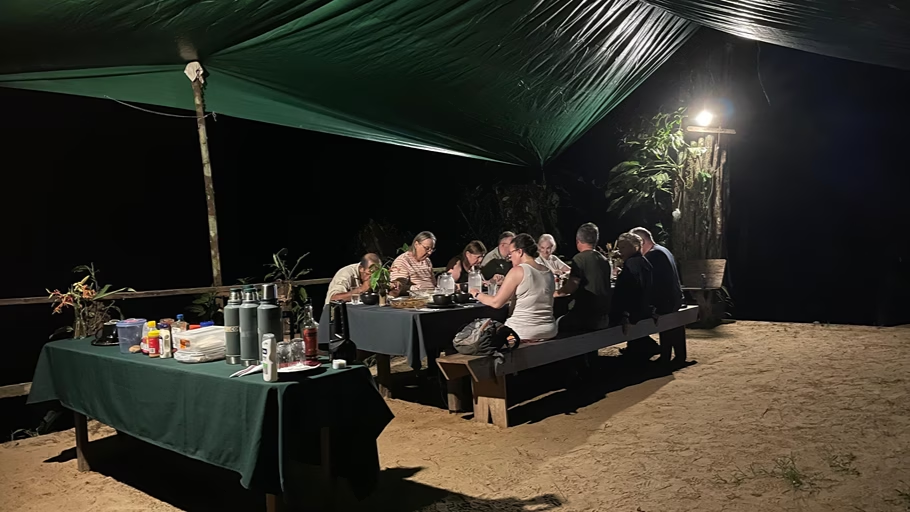
There is very little separation between where you sleep, where you eat and the forest you came to experience.
You hear it, travel through it and wake up inside it.
Who Will Enjoy Mapari Most?
Mapari should particularly appeal to birders who are comfortable trading some conventional comfort for access to remote habitat.
It makes obvious sense for people who have Harpy Eagle high on their wish list, but also for wildlife photographers, naturalists and adventure travellers who enjoy being in the field rather than simply travelling between comfortable lodges.
Patience helps.
So does arriving with an interest in everything around you rather than expecting one bird or animal to define whether the trip has been successful.
Watching Harpy Eagles Responsibly
A nesting site needs to be treated differently from an ordinary birding location.
Guide instructions matter. Distance matters. Noise matters.
The priority should always be allowing the birds to behave naturally. If conditions are not suitable for viewing, that needs to be respected.
Responsible birding is not about forcing a closer photograph or staying longer than is sensible. It is about having access to extraordinary habitat while leaving as little impact as possible.
For a bird such as the Harpy Eagle, that approach is part of the experience.
Extend the Journey: Birding Tours With Wilderness Explorers
Mapari works well as an introduction to Wilderness Explorers’ wider birding programme, but there are several ways of going much further.
The Birds of Guyana itinerary is Wilderness Explorers’ longer specialist birding journey, moving through multiple habitats while looking for many of the country’s most sought-after birds, including Harpy Eagle and Guiana Shield specialities.
The Birding Guyana tour travels through important birding areas including Iwokrama, Atta, Surama and Karanambu. It combines focused birding with opportunities for other wildlife across rainforest, rivers and savannah.
For travellers looking for a shorter and more price-conscious specialist itinerary, Guyana Birding on a Budget combines coastal and interior birding with rainforest, river experiences and some of Guyana’s major target birds.
Visitors spending time in Georgetown can also add Birding in the Botanical Gardens, providing a much more accessible introduction to some of the birdlife around the capital before or after a longer journey into the interior.
The Mahaica River Tour provides a completely different birding environment and is particularly relevant to travellers interested in the Hoatzin and Guyana’s coastal riverine birdlife.
There is also a direct Mapari connection through the Kanuku Mountains Expedition in Guyana. The itinerary spends time at Mapari and highlights the area’s wildlife opportunities, including the Harpy Eagle, while making clear that individual wildlife sightings are never guaranteed.
Birding also forms part of several wider Wilderness Explorers nature itineraries. These include the Guyana Nature Experience, Guyana in Living Colour, Rewa, Rainforest and Kaieteur Explorer, the Demerara River Cruise and Kaieteur and Orinduik Falls Tour.
That gives birders a choice. A journey can be built almost entirely around birds, include a few focused birding days, or make birdwatching one part of a wider Guyana wildlife experience.
All of the current options can be explored from the main Guyana birding tours page.
Planning a Visit to Mapari Wilderness Camp
A trip to Mapari needs a little more preparation than an ordinary lodge stay.
Lightweight field clothing, suitable footwear, binoculars and good protection for cameras and optics from rain and humidity are sensible starting points.
Travellers also need to be comfortable with hammock accommodation, simple facilities and spending time in a genuinely remote environment.
The exact journey into Mapari will depend on the itinerary being arranged, so current access, timing and logistics should be confirmed with Wilderness Explorers when planning the trip.
Most importantly, arrive with realistic wildlife expectations.
Harpy Eagle may be the bird that first gets your attention. The forest, the river and the experience of being at Mapari are what make travelling there worthwhile.
For current camp information and help planning a visit, explore Mapari Wilderness Camp.
Frequently Asked Questions About Harpy Eagles and Birding in Guyana
Are there Harpy Eagles in Guyana?
Yes. Harpy Eagles occur in Guyana and are one of the major target species for birders visiting the country’s rainforest regions. Wilderness Explorers includes opportunities to search for Harpy Eagles on several of its birding and wildlife itineraries, including experiences connected with Mapari and other rainforest areas.
Where can I see a Harpy Eagle in Guyana?
One known opportunity is associated with Mapari Wilderness Camp near the Kanuku Mountains. A Harpy Eagle nesting area is associated with the camp, with opportunities to look for the birds when the nest is active. Wildlife sightings are never guaranteed.
Can you see Harpy Eagles at Mapari Wilderness Camp?
Potentially, yes. Mapari has a known Harpy Eagle nesting location, and visiting the area may provide an opportunity to look for the birds when the nesting site is active. Because these are completely wild birds, visitors should never approach a Mapari trip expecting a guaranteed Harpy Eagle sighting.
Is Mapari Wilderness Camp good for birdwatching?
Mapari is particularly suited to birders interested in remote rainforest birding rather than conventional lodge-based birdwatching. Forest trails, river exploration, night activities and the opportunity to search for Harpy Eagles all form part of its appeal.
What birds can you see around Mapari?
Harpy Eagle is the best-known target associated with Mapari, but the wider attraction is the opportunity to bird within remote rainforest and river habitat. Species and activity naturally change, so visitors interested in particular targets should ask Wilderness Explorers about current observations when planning their visit.
Where is Mapari Wilderness Camp?
Mapari Wilderness Camp is beside the Mapari River at the foot of the Kanuku Mountains in Guyana. It is a remote wilderness camp reached by boat rather than a conventional roadside lodge.
What is staying at Mapari Wilderness Camp like?
Mapari is a simple and rustic wilderness camp. Visitors should expect hammock-style accommodation, basic facilities, river bathing and close contact with the surrounding rainforest and waterways. The experience is designed for travellers who value wilderness and wildlife access more than conventional hotel comforts.
Is Guyana good for birdwatching?
Yes. Guyana combines rainforest, rivers, savannah and coastal habitats with many species associated with the Guiana Shield. The variety of habitats, relatively intact wilderness and specialist wildlife guides have made the country an increasingly important destination for birders interested in northern South America.
What birding tours does Wilderness Explorers offer in Guyana?
Dedicated options include Birds of Guyana, Birding Guyana, Guyana Birding on a Budget and Birding in the Botanical Gardens. River trips and broader nature itineraries provide additional opportunities. The easiest place to compare them is the main Guyana birding tours page.