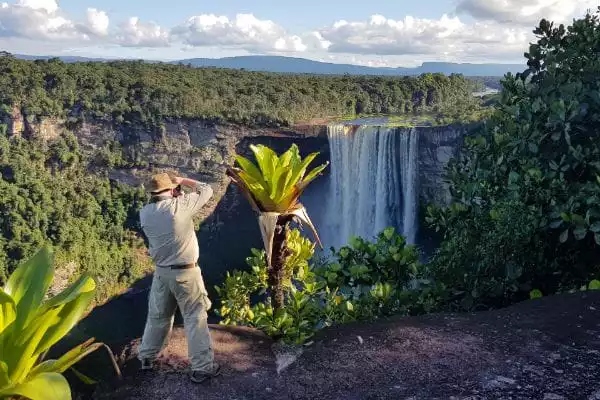
Guyana is one of South America’s most rewarding destinations for birdwatchers. Its Atlantic coastal wetlands, mangrove-lined rivers, lowland rainforest, forested highlands and open savannahs support an exceptional variety of birdlife, including many species associated with the ancient Guiana Shield.
A current country checklist based on South American Classification Committee taxonomy records more than 800 confirmed species in Guyana. However, the attraction is not simply the length of the list. Birders can move between dramatically different habitats and search for colourful cotingas, powerful forest raptors, range-restricted woodpeckers and unusual river birds during the same journey.
These nine iconic birds of Guyana provide an introduction to the species and habitats that make the country such a distinctive birding destination.
1. Guianan Cock-of-the-rock
Scientific name: Rupicola rupicola
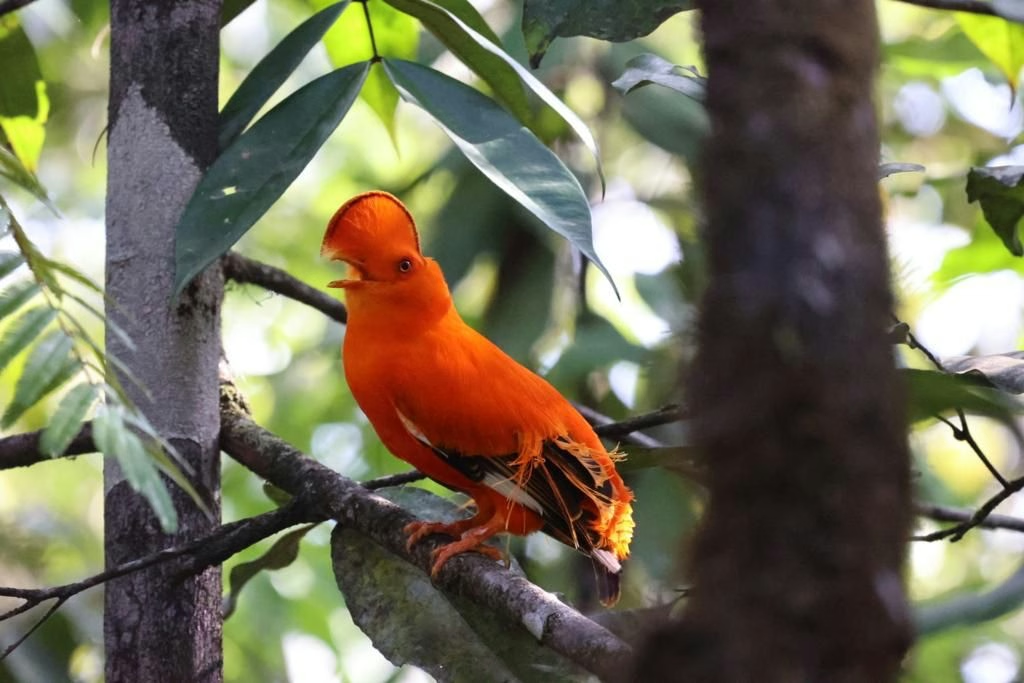
Few birds create as memorable a first impression as the male Guianan Cock-of-the-rock. Its brilliant orange plumage, rounded body and prominent semicircular crest can appear almost unreal against the dark green rainforest.
The species occurs across the Guiana Shield and favours humid forest near rocky outcrops. Males gather at traditional display grounds, known as leks, where they compete for the attention of females. The females are much less conspicuous, with darker brownish-grey plumage that provides camouflage around rocky nesting areas.
Wilderness Explorers’ birding itinerary includes a forest trail near Corkwood where guides search for the species before continuing towards the Indigenous community of Surama. As with every wild bird, an encounter cannot be guaranteed, but visiting an established habitat with experienced local guides significantly improves the opportunity.
2. Guianan Puffbird
Scientific name: Notharchus macrorhynchos
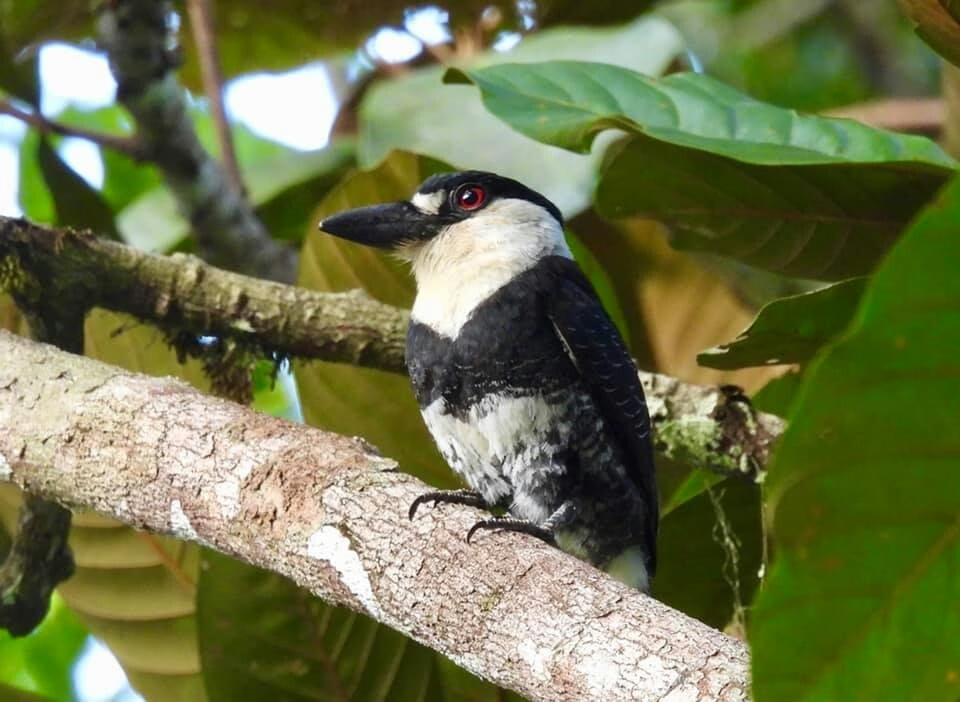
The Guianan Puffbird is a striking black-and-white forest bird with a heavy bill, broad head and alert red eye. Although its plumage is distinctive, its habit of sitting quietly on exposed branches can make it surprisingly easy to overlook.
It is found in Guyana and neighbouring parts of the Guiana Shield, where it occupies tropical forest and forest-edge habitats. The species was previously grouped with other similar puffbirds but is now recognised as a separate species.
Potential locations on Wilderness Explorers itineraries include the Iwokrama forest, the canopy walkway area and Surama. Looking from elevated platforms can help birders locate canopy species that may be difficult to observe from the forest floor.
3. Blood-coloured Woodpecker
Scientific name: Veniliornis sanguineus
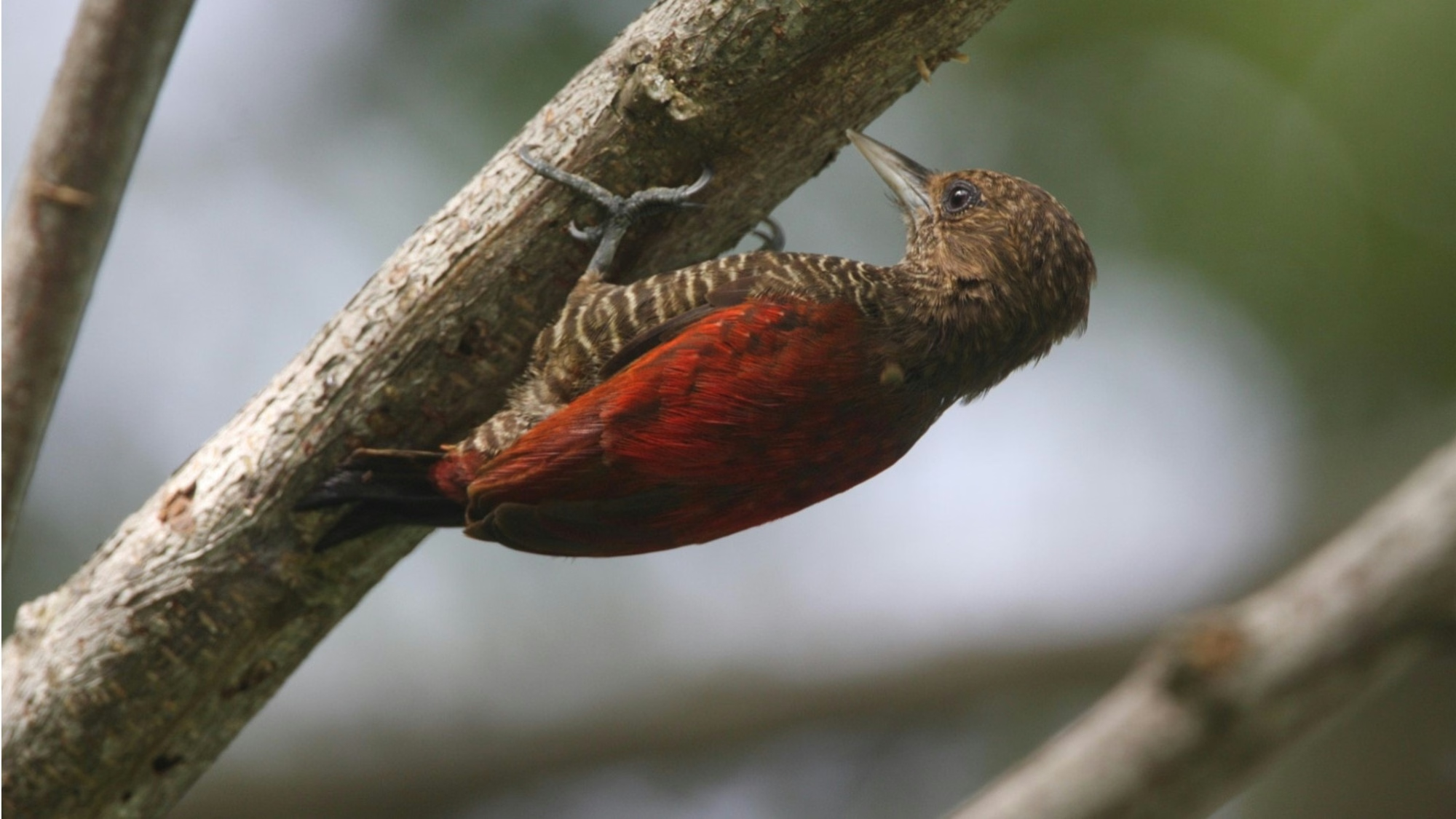
The Blood-coloured Woodpecker is one of the most geographically restricted species featured in this article. Its range is centred on the coastal lowlands of Guyana and Suriname, where it inhabits mangroves, swamp forest, woodland and other lowland habitats.
The bird’s deep red lower back and rump provide the colour behind its unusual name. Its barred underparts and comparatively subdued upper plumage can make it difficult to detect when it is moving along shaded branches and trunks. It often searches for insects either alone or as a pair.
The Mahaica River area east of Georgetown offers an opportunity to search for this range-restricted woodpecker. Early-morning river birding also introduces travellers to herons, ibis, marsh birds and Guyana’s national bird, the Hoatzin. Visit Guyana Birding on a budget tour. It may also be seen during birding in the Georgetown Botanical Gardens.
4. Harpy Eagle
Scientific name: Harpia harpyja
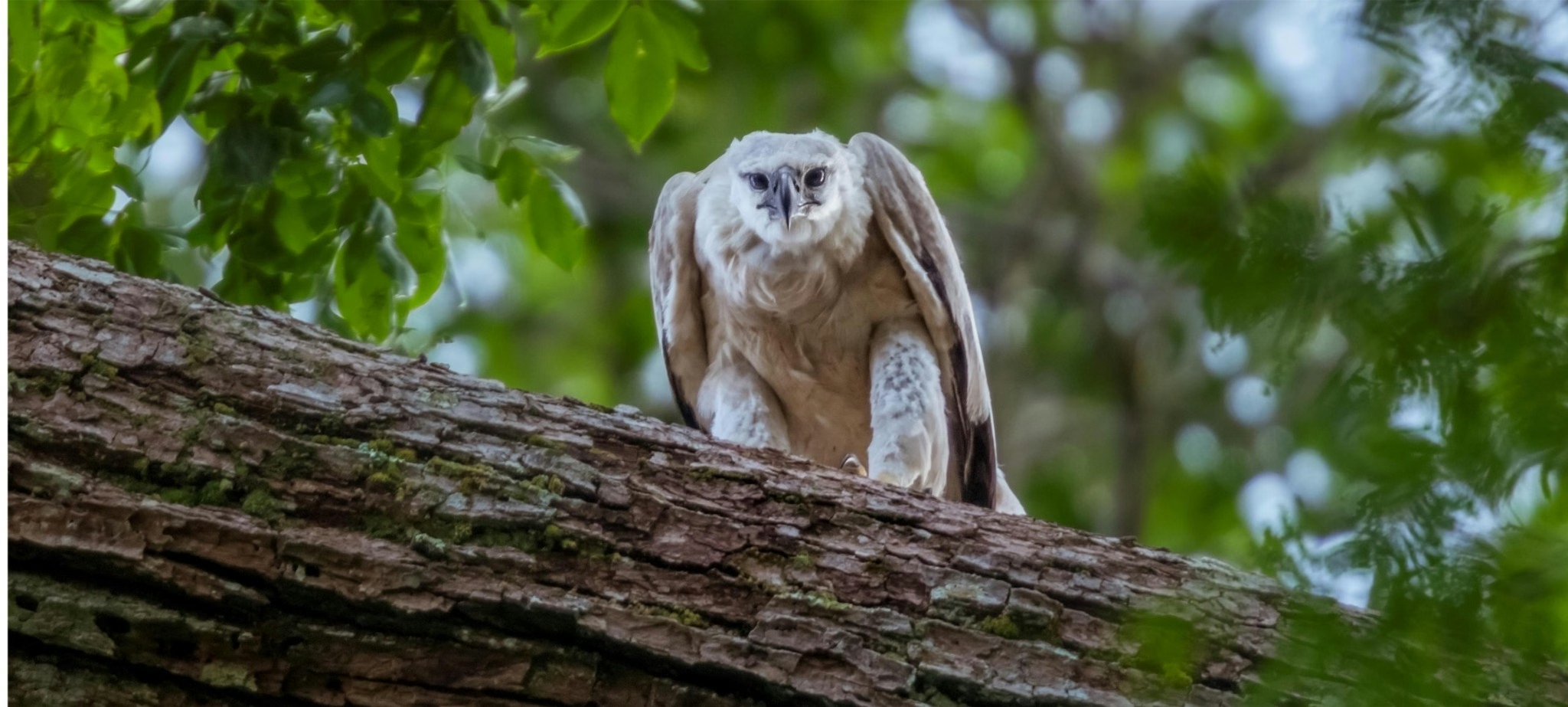
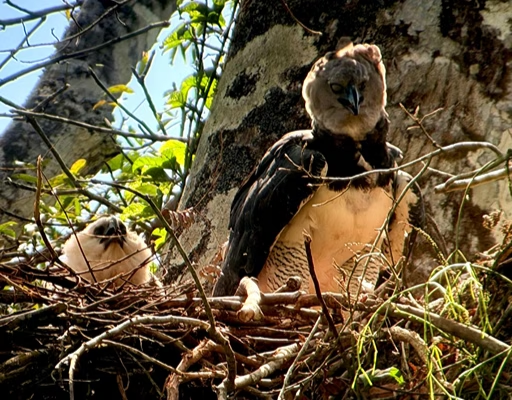
The Harpy Eagle is among the most powerful forest raptors in the Americas. Its massive talons, broad wings, strong body and distinctive double crest make it one of the most sought-after birds on a Neotropical birding journey.
Harpy Eagles depend on extensive tropical forest and usually nest high in large trees. Their populations have declined because of forest loss and hunting, and the species is currently considered Vulnerable. Even within suitable habitat, the birds can be difficult to find because they occur at low densities and use large territories.
A Harpy Eagle should therefore be treated as a special possibility rather than a guaranteed sighting. Knowledge of recent nesting activity and the support of local and Indigenous guides can be especially valuable when searching Guyana’s interior forests. Visit the Birds in Guyana Tour.
5. Hoatzin
Scientific name: Opisthocomus hoazin
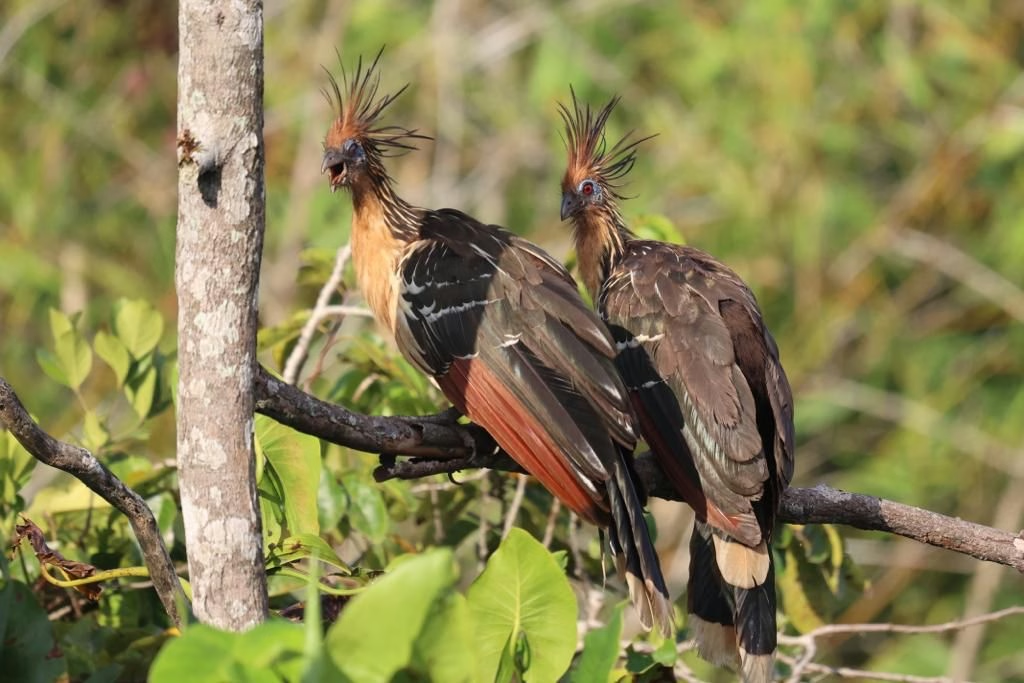
Known locally as the Canje Pheasant, the Hoatzin is Guyana’s national bird and one of South America’s most unusual species. It has a spiky crest, blue facial skin, red eyes and a long tail, creating a prehistoric appearance that is unlike that of most other birds.
Hoatzins live around swamps, riverbanks, mangroves and other wetland habitats. They feed mainly on leaves and possess an unusual digestive system in which plant material is fermented in an enlarged crop. Young Hoatzins also have claws on their wings, which help them climb through branches before they become capable fliers.
The vegetation along the Mahaica River provides suitable habitat, and the birds can sometimes be observed feeding or resting in riverside trees. A quiet boat journey is an excellent way to watch their behaviour without approaching too closely. Visit Mahaica River Tour.
6. Crimson Fruitcrow
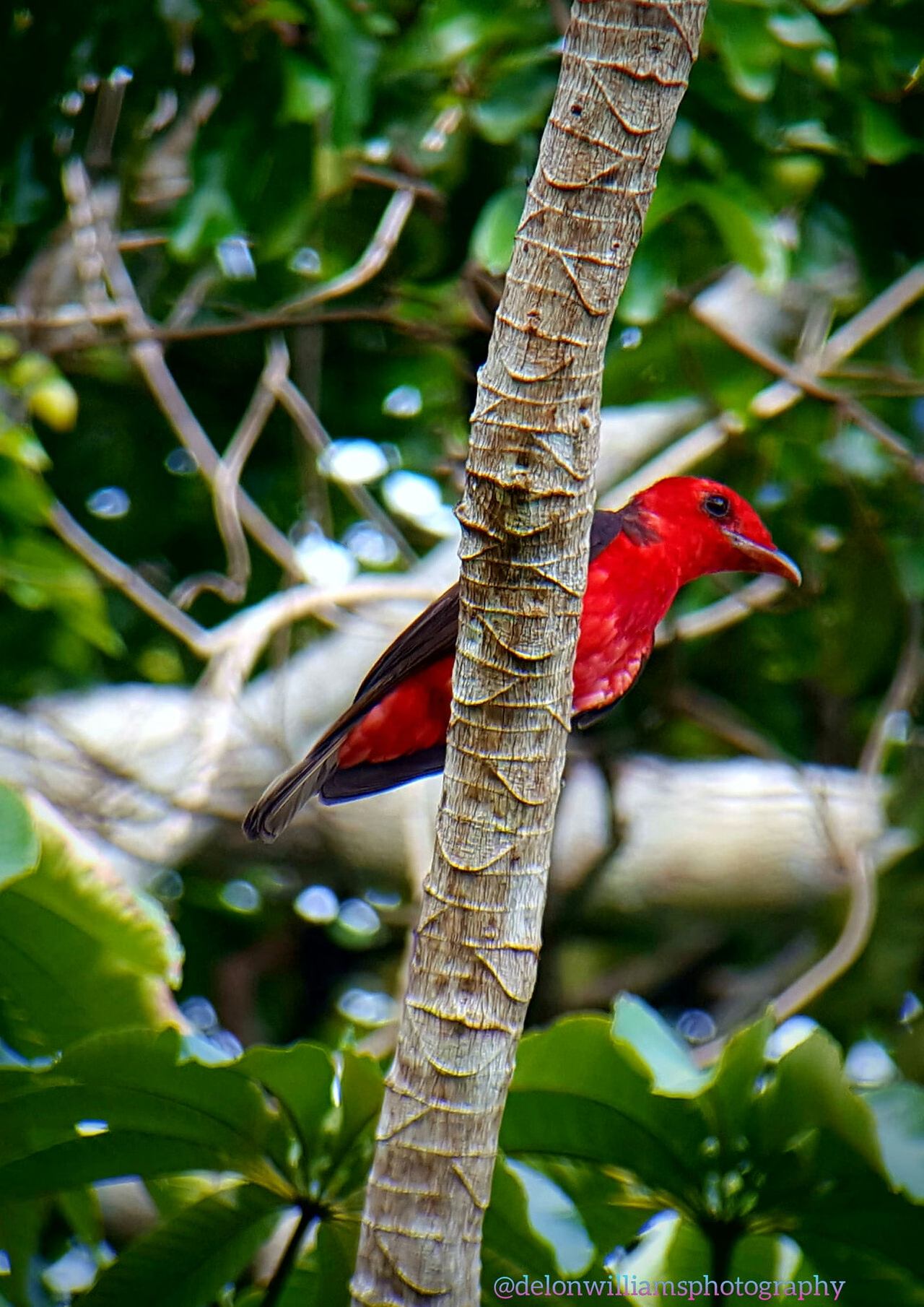
Scientific name: Haematoderus militaris
Despite its English name, the Crimson Fruitcrow is not a crow. It belongs to the cotinga family, a remarkable group that includes some of South America’s most colourful and unusual forest birds.
The adult male is immediately recognisable when seen well, with rich crimson plumage contrasting against dark wings and tail. The species inhabits tropical lowland rainforest and is often encountered in or near the forest canopy. It can be uncommon and patchily distributed, so a sighting is especially memorable.
The clearing around Atta Rainforest Lodge is included in Wilderness Explorers’ itinerary as a particularly useful location for searching for the Crimson Fruitcrow. Nearby trails and the Iwokrama Canopy Walkway provide additional opportunities to observe cotingas and other canopy birds. Visit the Birds of Guyana Tour.
7. Rufous Crab Hawk
Scientific name: Buteogallus aequinoctialis
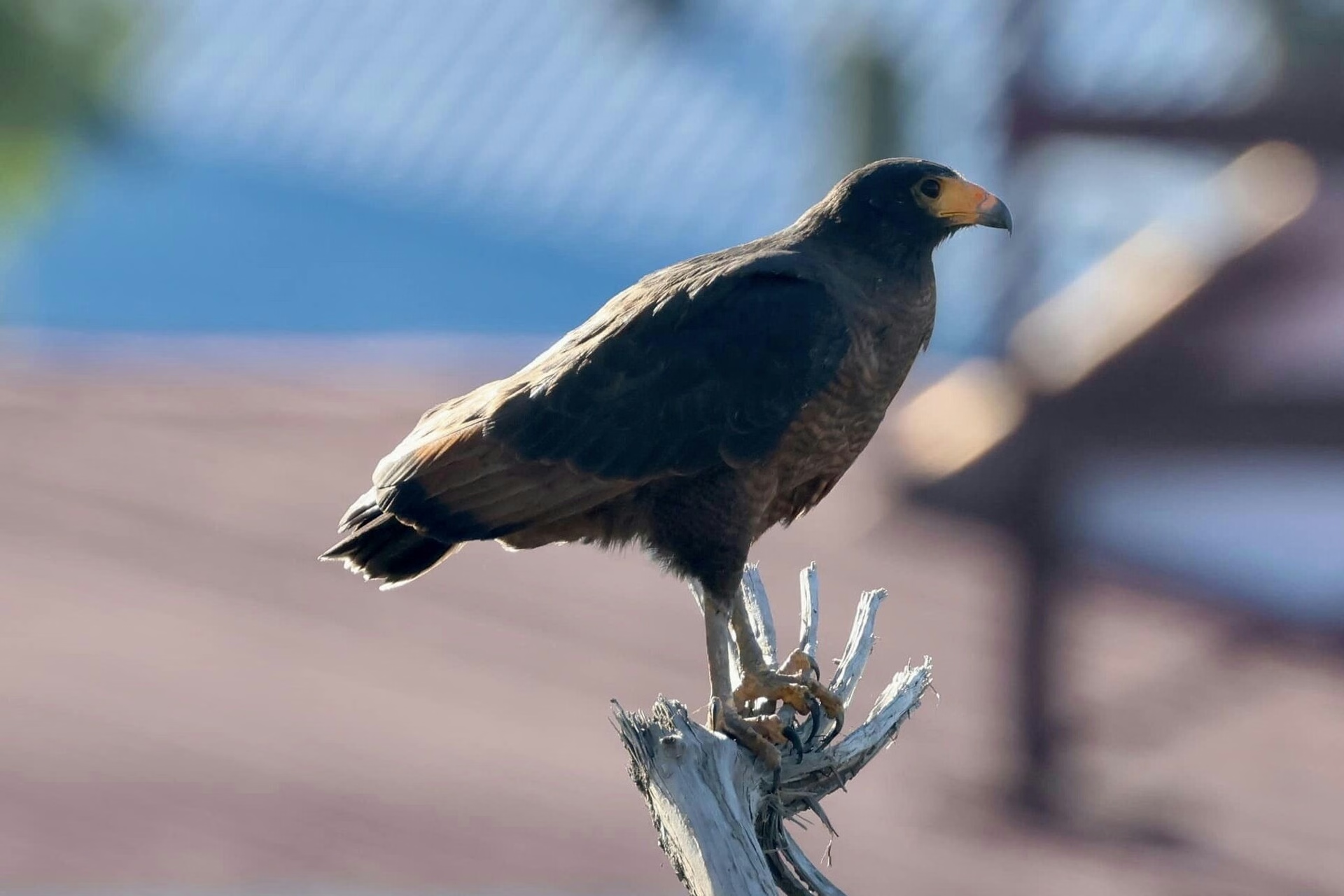
The Rufous Crab Hawk is one of Guyana’s most distinctive coastal raptors. This large, strongly built hawk is associated with coastal forest and mangrove habitat, where it can be seen perched above waterways, mudflats and tidal vegetation. The current Guyana bird checklist classifies the species as Near Threatened.
Its dark upperparts, strong legs and contrasting rufous underparts make an adult particularly striking when observed well. As its name suggests, it is closely associated with coastal environments where crabs and other shoreline prey are available.
The mudflats, mangroves and river systems east of Georgetown provide suitable habitat. Wilderness Explorers’ Guyana Birding on a Budget itinerary includes searches along the coastal mudflats, while the wider Birding Guyana itinerary also identifies the Rufous Crab Hawk as one of its target species.
Because it is tied so closely to mangrove and coastal ecosystems, the Rufous Crab Hawk helps demonstrate why a Guyana birding tour should combine the Atlantic coast with the country’s rainforest and savannah interiors. Visit the Birding on a Budget Tour. It may also be encountered during the Demerara River Cruise.
8. Sun Parakeet
Scientific name: Aratinga solstitialis
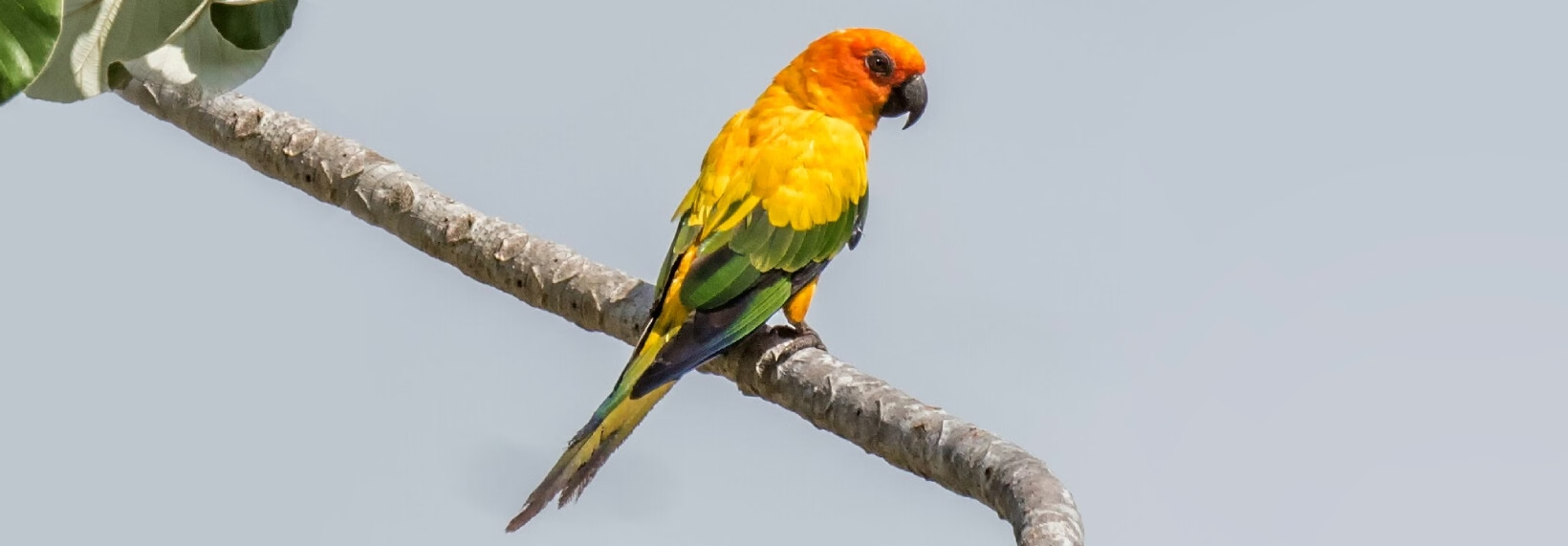
The Sun Parakeet is one of the most colourful and conservation-significant birds of Guyana. Its brilliant yellow and orange plumage, green flight feathers and energetic behaviour make a wild encounter immediately memorable.
Although the species is familiar in captivity, wild populations are highly localised. The current Guyana checklist classifies the Sun Parakeet as Endangered. Karasabai, an Indigenous community close to the Brazilian border in Region Nine, is especially associated with the species and has supported monitoring, education, nest protection and community-based ecotourism initiatives.
Wilderness Explorers includes the Sun Parakeet among the specialist possibilities available through an extension to its Birding Guyana itinerary. Reaching its habitat requires additional travel into a remote area, making this more suitable for birders seeking uncommon and geographically restricted species.
Sightings can never be guaranteed, but travelling with local guides and respecting community access arrangements support both responsible birding and local conservation efforts. Visit Guyana birding Tour.
9. Red Siskin
Scientific name: Spinus cucullatus
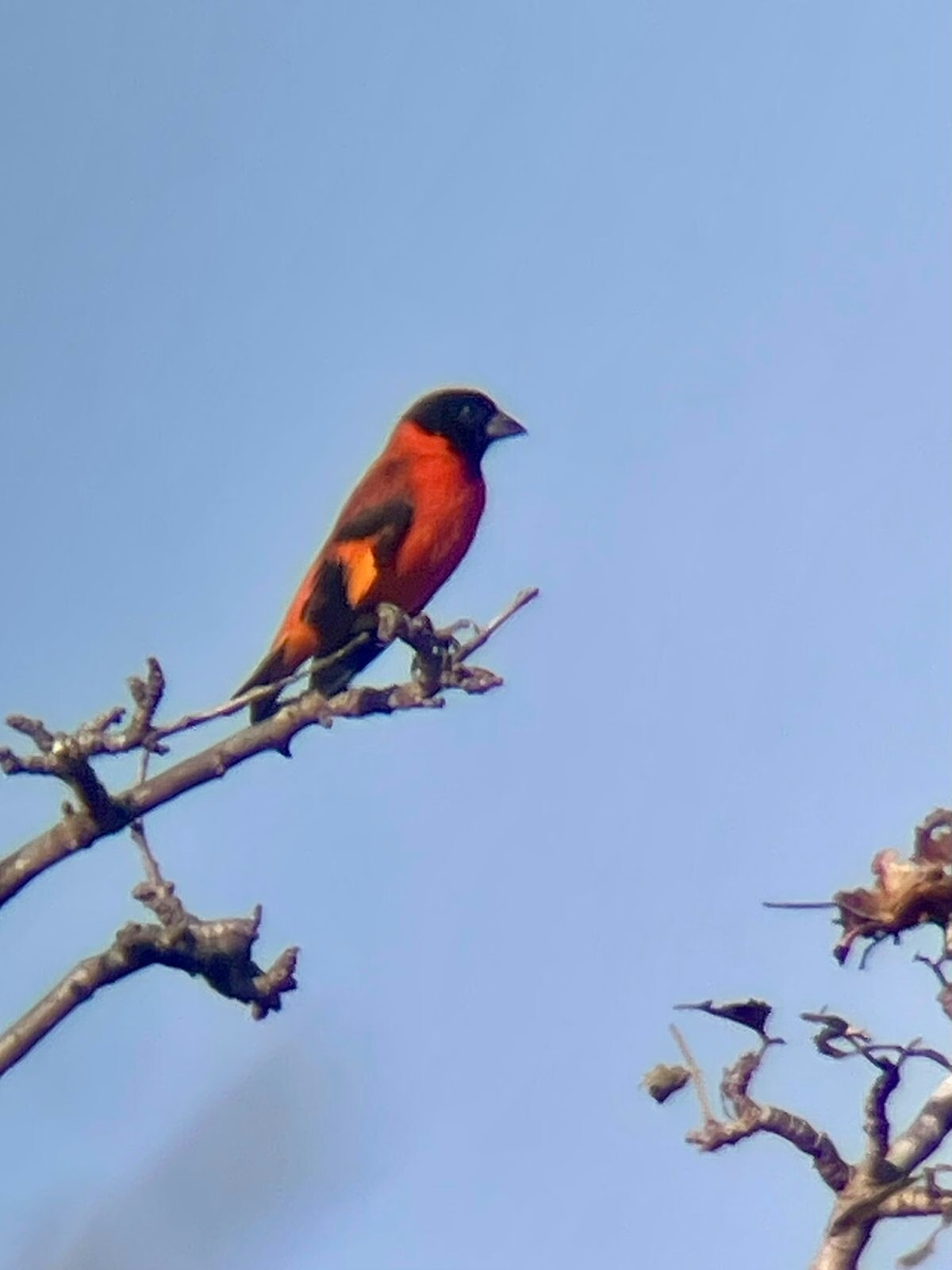
The Red Siskin is a small finch with an extraordinary conservation story. Adult males display rich scarlet plumage contrasting with a dark head and wings, making the species instantly recognisable when perched in open vegetation.
The species is classified as Endangered and suffered severe declines because of trapping for the cage-bird trade, combined with habitat loss. A previously unknown population was discovered in southern Guyana in 2000, giving conservationists renewed hope for the species’ survival.
The South Rupununi Conservation Society has worked with local communities on research, environmental education, ranger training and habitat protection. The Red Siskin also contributed to the recognition of South Central Rupununi as Guyana’s first Important Bird and Biodiversity Area.
Wilderness Explorers’ longer Birds of Guyana itinerary includes dedicated days in the South Rupununi to search for the Red Siskin, with Wichabai Ranch. Its presence turns this part of the journey into more than a checklist exercise: it introduces travellers to Indigenous-led conservation and the importance of protecting fragile savannah habitats. Visit the Birds of Guyana Tour.
Where to See Birds in Guyana
A productive birding journey in Guyana usually combines several regions rather than remaining in one location. By visiting coastal wetlands, riverine habitats, lowland rainforest and open savannah, travellers encounter a much wider range of species than they would in a single ecosystem. Each habitat supports a different bird community, from Hoatzins, herons and coastal raptors to canopy specialists, Guiana Shield endemics and rare savannah birds.
Mahaica River and the Coastal Wetlands
The Mahaica River and nearby coastal habitats provide opportunities to search for the Hoatzin, Blood-coloured Woodpecker, Rufous Crab Hawk, herons, ibis and numerous wetland species.
Iwokrama Rainforest
Iwokrama protects an extensive area of tropical forest crossed by rivers, trails and a limited-access interior road. Its varied forest habitats support puffbirds, cotingas, parrots, woodpeckers, antbirds, raptors and nocturnal species.
Atta Rainforest Lodge and the Canopy Walkway
The Iwokrama Canopy Walkway allows birders to observe the upper levels of the forest from platforms more than 30 metres above the ground. The Atta area is especially rewarding for canopy species, while the lodge clearing offers opportunities to search for the Crimson Fruitcrow and numerous Guiana Shield endemic species.
Corkwood and Surama
The forest around Corkwood contains suitable habitat for the Guianan Cock-of-the-rock. Surama adds a mixture of rainforest, foothills, savannah and river habitats, creating a varied birding experience within a relatively compact area.
South Rupununi Savannah
The open savannahs and woodland edges of the South Rupununi support a very different selection of birds from Guyana’s coastal and rainforest regions. This is an important area for specialist species such as the Red Siskin and demonstrates why combining several habitats is essential for travellers hoping to see the greatest possible variety of Guyana’s birdlife.
Choosing a Guyana Birding Tour
Wilderness Explorers currently offers different ways to experience the country’s birdlife.
The Guyana Birding on a Budget Tour is a nine-day itinerary combining the Mahaica River, Iwokrama, Atta, the canopy walkway and Surama. The longer Birds of Guyana Tour is listed as a 15-day, moderately paced journey for birders. The wider birding collection also includes Birding Guyana, along with shorter birdwatching experiences.
Responsible Birdwatching in Guyana
Wild bird sightings are never guaranteed, particularly for uncommon forest species such as the Harpy Eagle. Travellers should maintain a respectful distance, avoid disturbing active nests and follow the directions of their guides.
Local and Indigenous guides contribute knowledge of calls, seasonal movements, fruiting trees, trails and nesting territories. Using locally operated services also helps connect wildlife tourism with communities living alongside the habitats visitors have travelled to experience.
Frequently Asked Questions
How many bird species are found in Guyana?
More than 800 confirmed species appear on the current country checklist, although totals can vary as taxonomic classifications change and new records are assessed.
What is the national bird of Guyana?
The Hoatzin is Guyana’s national bird. It is also commonly called the Canje Pheasant in Guyana.
What are some of the most famous birds of Guyana?
Well-known species include the Guianan Cock-of-the-rock, Harpy Eagle, Hoatzin, Blood-coloured Woodpecker, Guianan Puffbird and Crimson Fruitcrow.
Can a Harpy Eagle sighting be guaranteed?
No wildlife sighting can be guaranteed. However, when visiting a confirmed active nest site, guests have approximately a 90% chance of seeing a Harpy Eagle. Wilderness Explorers works closely with local communities and experienced guides to monitor known nest sites and provide the most up-to-date information before each visit.
Is Guyana suitable for first-time birdwatchers?
Yes. Beginners can enjoy conspicuous river, wetland, savannah and forest birds, while experienced birders can concentrate on Guiana Shield specialities and less frequently observed rainforest species.